Eye Coloring Pages
An eye coloring page looks simple until you start. The iris alone can hold a dozen colors. This set gives you eyes of every kind: large realistic eyes with lashes and brows, a labeled diagram of the eyeball, animal eyes with strange pupils, anime-style eyes with big highlights and pairs of eyes showing different feelings. Art students practice on them, and science teachers use the diagram for the five senses.
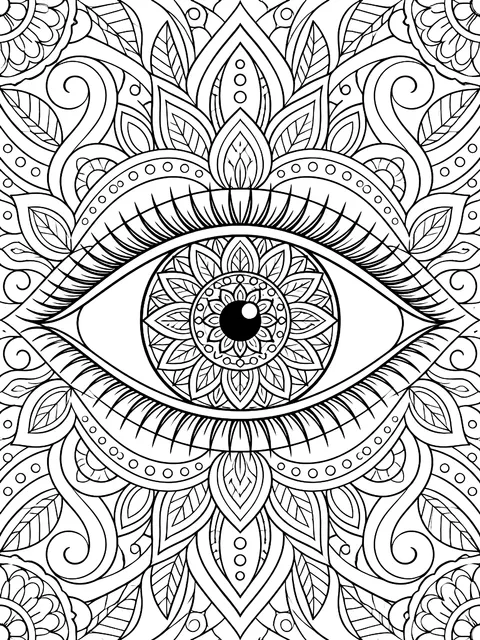 Eye with a mandala irisDetailed
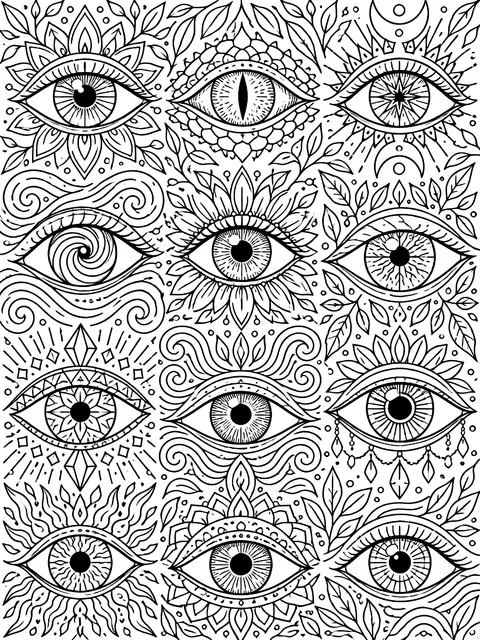 Page of twelve different eyesDetailed
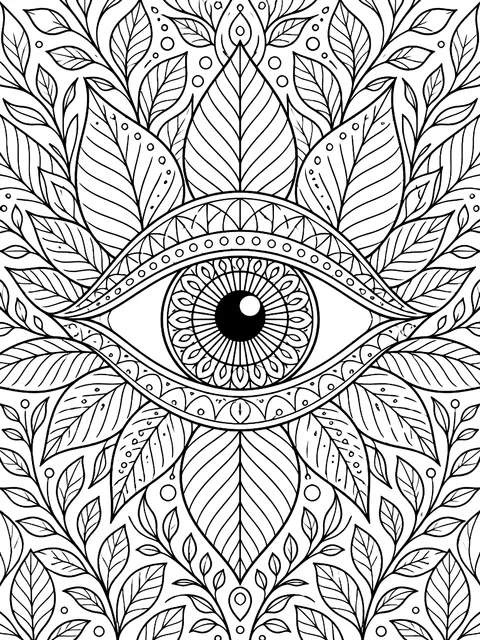 Decorative eye surrounded by leavesDetailed
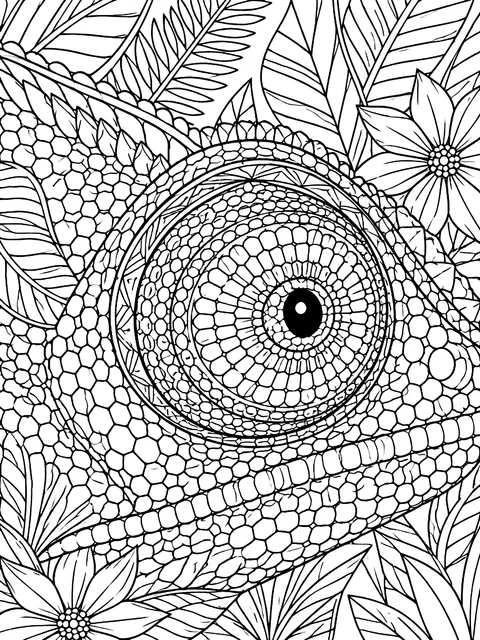 Chameleon eyeDetailed
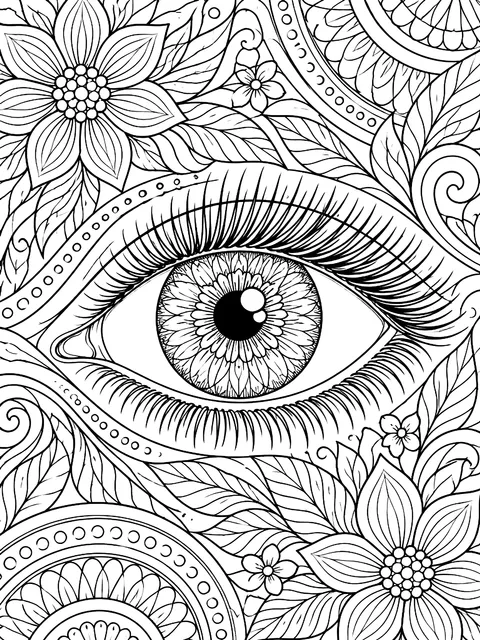 Realistic eye with detailed lashesDetailed
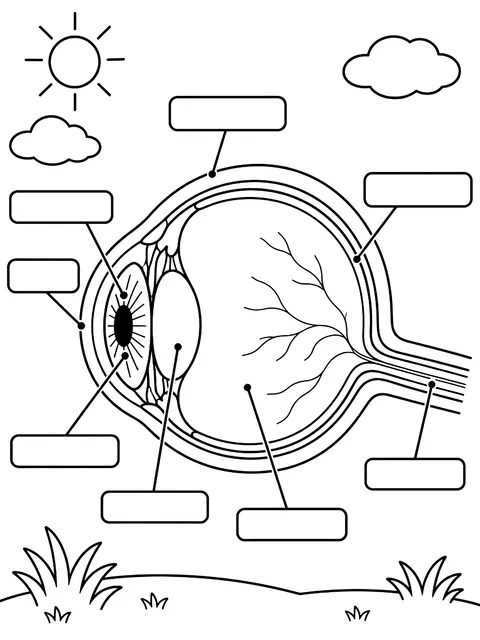 Eye anatomy diagram with blank labelsMedium
 Square and cat-eye glasses framesMedium
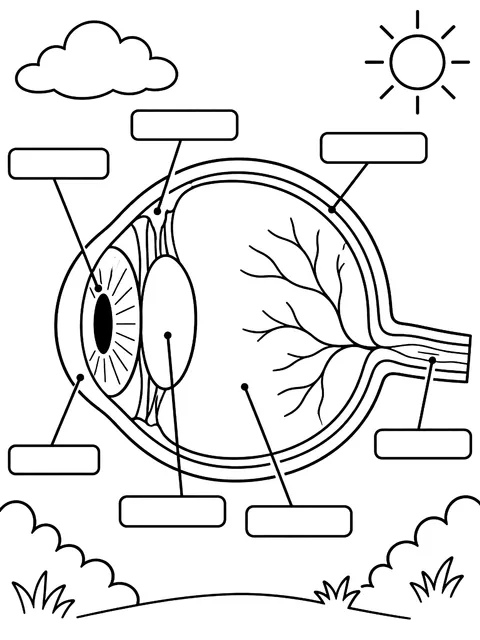 Labeled eye anatomy diagramMedium
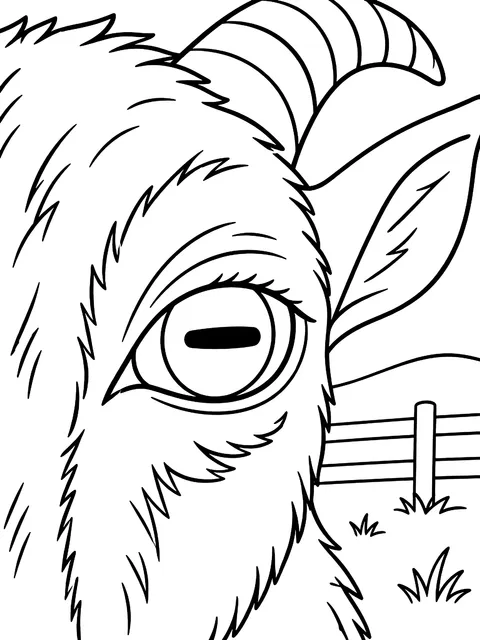 Goat eye with a horizontal pupilMedium
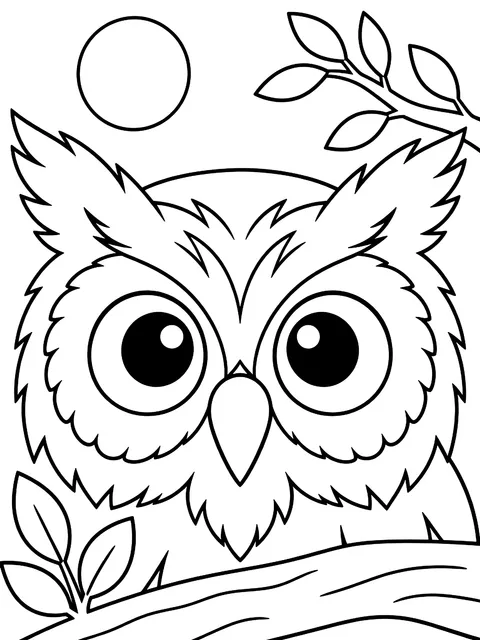 Owl eyesMedium
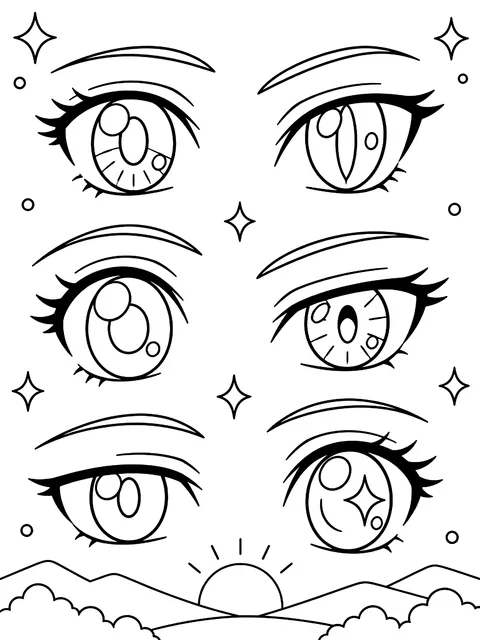 Set of anime-style eyesMedium
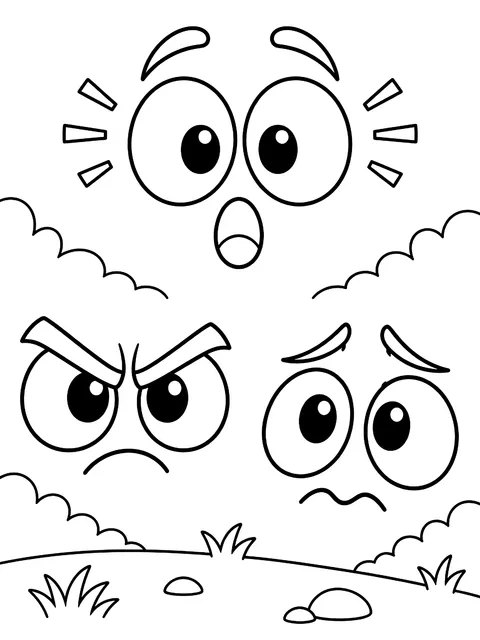 Surprised, angry and worried eyesMedium
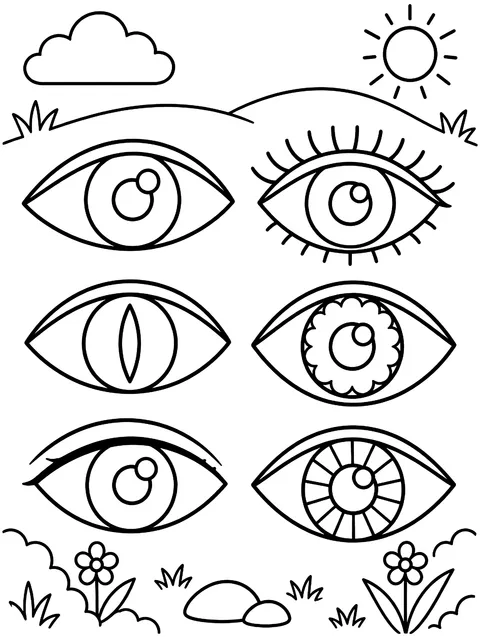 Six eye shapesMedium
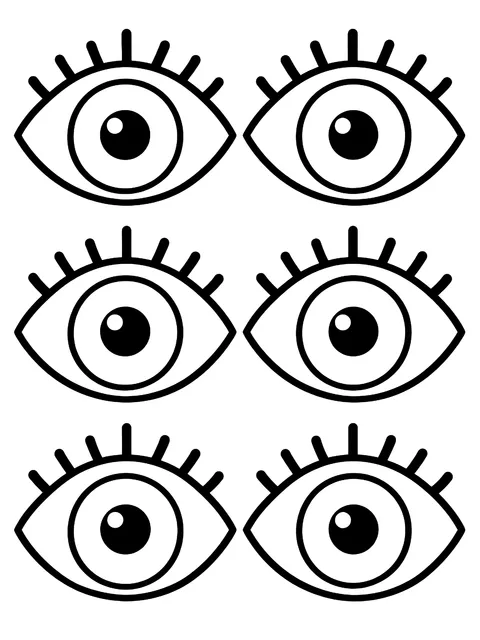 Eye color chart with blank irisesEasy
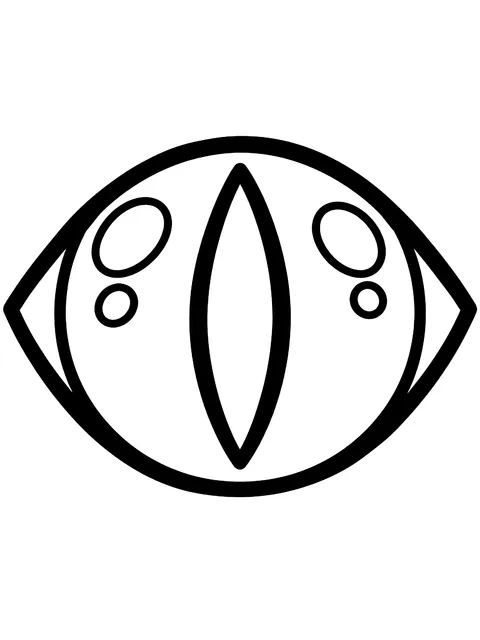 Cat eye with a slit pupilEasy
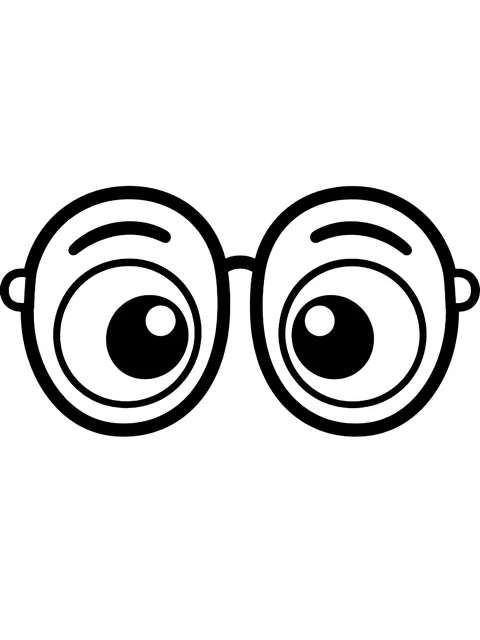 Eyes behind round glassesEasy
 Sleepy eyesEasy
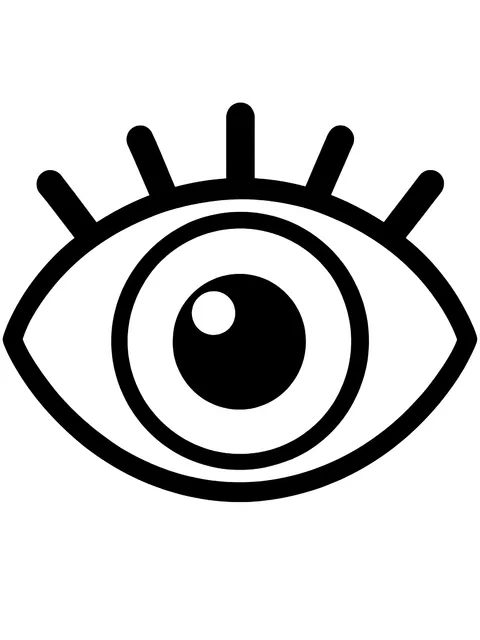 Single large eyeEasy
 Happy eyesEasy
 Pair of eyes with eyebrowsEasy
What's in the eye coloring pages
- Realistic eyes: a single large eye, a pair with eyebrows and a page of six eye shapes
- Eye anatomy: a cross-section of the eyeball with cornea, iris, pupil, lens, retina and optic nerve
- Animal eyes: a cat's vertical slit, a goat's horizontal bar, an owl's wide circles and a chameleon's cone
- Anime-style eyes: big glossy eyes in several shapes, with highlights to leave white
- Expressions: happy, sleepy, surprised, angry and worried eyes, shown with brows
- Decorative eyes: an eye whose iris is a mandala and one surrounded by leaves
- Eye color chart: a row of blank irises for brown, hazel, green, gray and blue
How to color a realistic eye
- Start with the iris. Lay down a light base of your main color. Add darker strokes that run from the pupil outward, like the spokes of a wheel.
- Add a second color. Real irises are rarely one shade. Brown eyes often have amber near the pupil. Blue eyes may have gray or a ring of gold. Hazel eyes mix green, brown and yellow.
- Fill the pupil with solid black, but leave the small highlight white. That white spot is what makes an eye look wet and alive.
- Shade the white. The white of the eye isn't pure white. Add a little light gray at the corners and under the upper lid.
- Draw the lashes in quick curved strokes that start thick at the lid and taper to a point.
Colored pencils are the best tool here, because the fine strokes in the iris and lashes need a sharp point.
Eye facts for the classroom
- The colored part is the iris. Its muscles make the pupil smaller in bright light and larger in dim light.
- The cornea is the clear dome at the front. The lens sits behind the pupil and focuses light on the retina at the back, and the optic nerve carries the signal to the brain.
- Brown is the most common eye color in the world.
- Animal pupils vary with lifestyle. Small cats that hunt by ambush have vertical slits. Grazing animals such as goats and sheep have horizontal pupils that give a wide view of the horizon.
- An owl's eyes are fixed in their sockets, so it turns its whole head to look around.
Frequently asked questions
Is every eye coloring page free?
Yes. All eye coloring pages are free to download and print for personal and classroom use.
Do you have an eye coloring sheet with labels for science class?
Yes. The eye anatomy page shows a cross-section with the main parts labeled. A second version has blank lines so students can write the labels themselves.
What colors do I need for coloring eyes realistically?
For brown eyes: dark brown, light brown, amber and black. For blue eyes: light blue, gray-blue, a little gray and black. Add a peach or tan for the lid.
Are there coloring pages of eyes in anime style?
Yes. One page collects large anime-style eyes in different shapes. Characters drawn that way are on our anime girl coloring pages.