Art Coloring Pages
These art coloring pages are for the art room as much as the kitchen table. Some show the tools: paint tubes, brushes, palettes and easels. Others teach an idea, like the color wheel or warm and cool colors. The rest borrow a technique from art history, such as dots, cubes or bold outlines, and leave the color to you. Think of it as coloring art with a lesson built in.
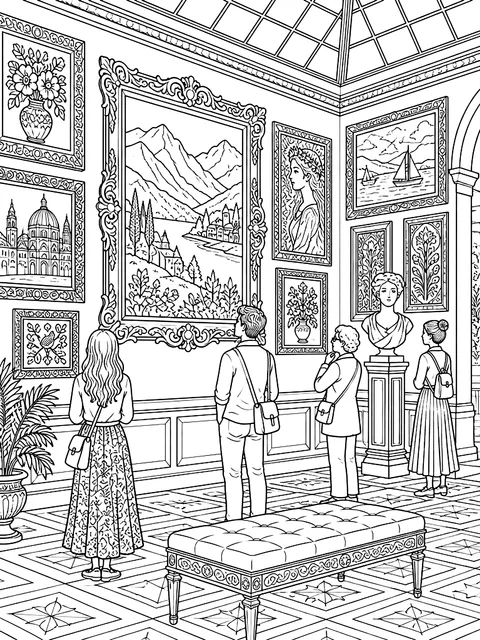 Gallery wall with visitorsDetailed
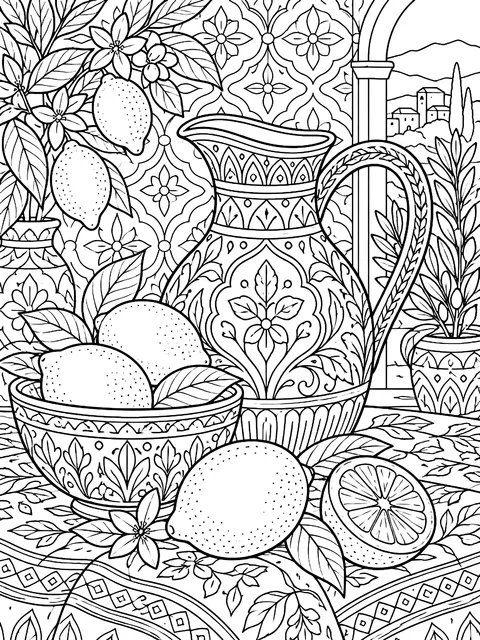 Still life with a jug and lemonsDetailed
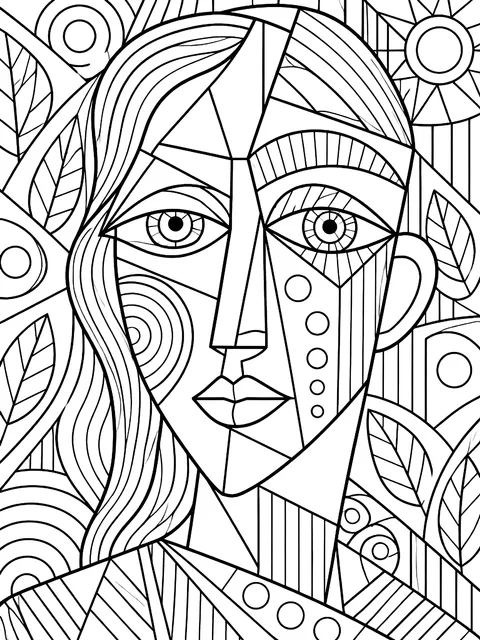 Cubist faceDetailed
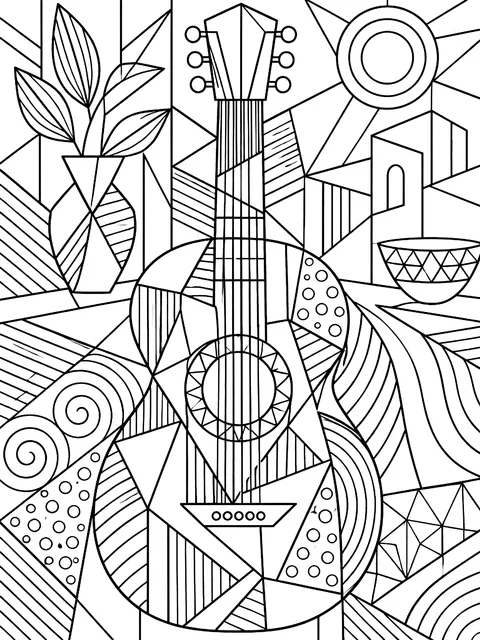 Cubist guitarDetailed
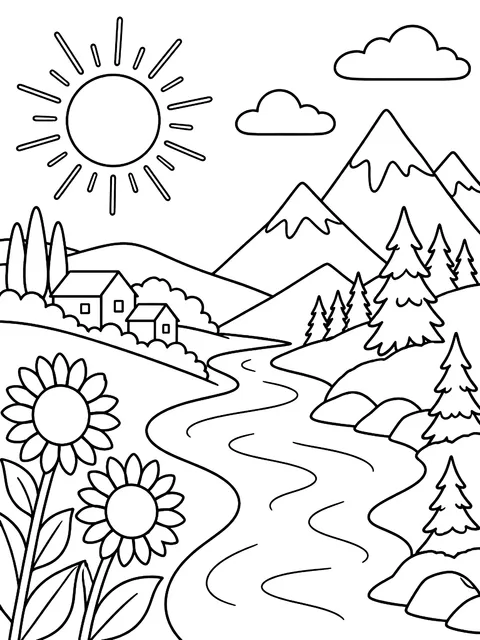 Warm and cool landscapeMedium
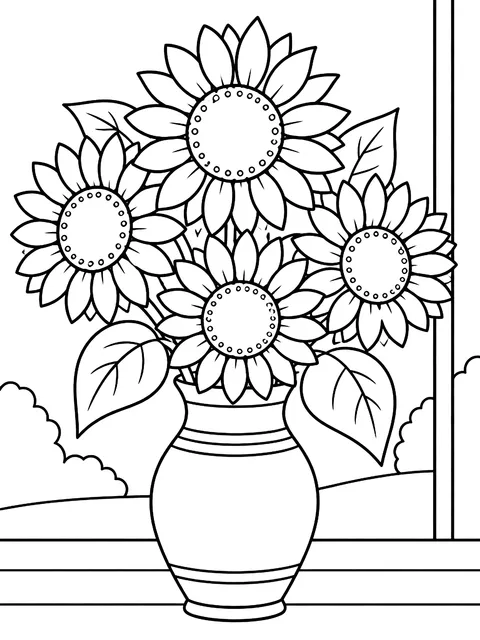 Vase of sunflowersMedium
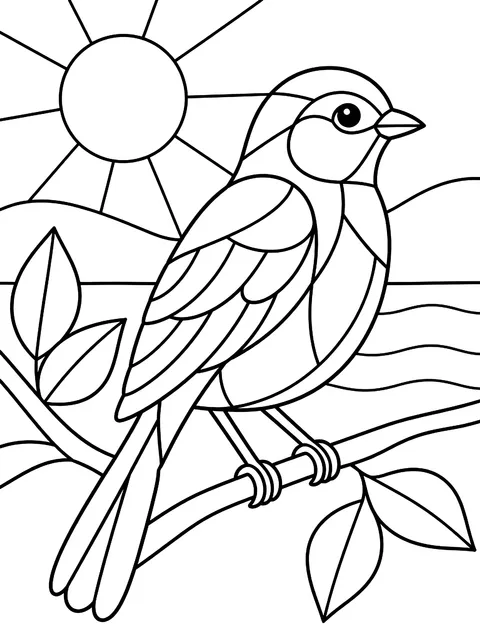 Stained glass birdMedium
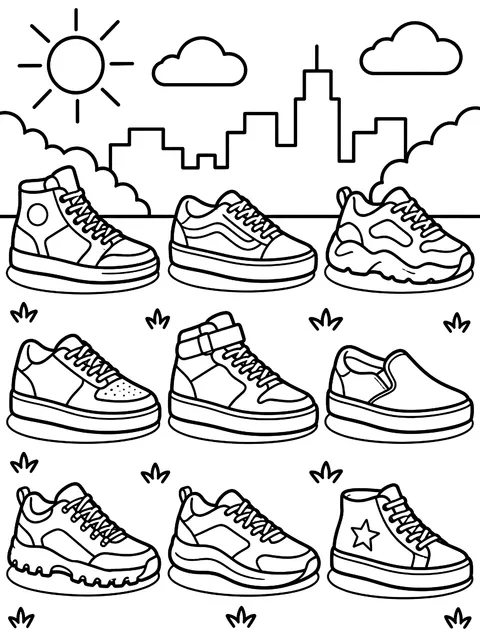 Pop style sneaker gridMedium
 Value scale to shadeMedium
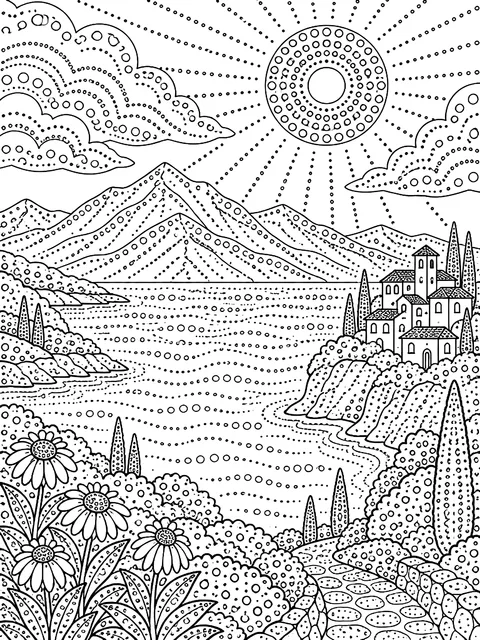 Dot painting landscapeDetailed
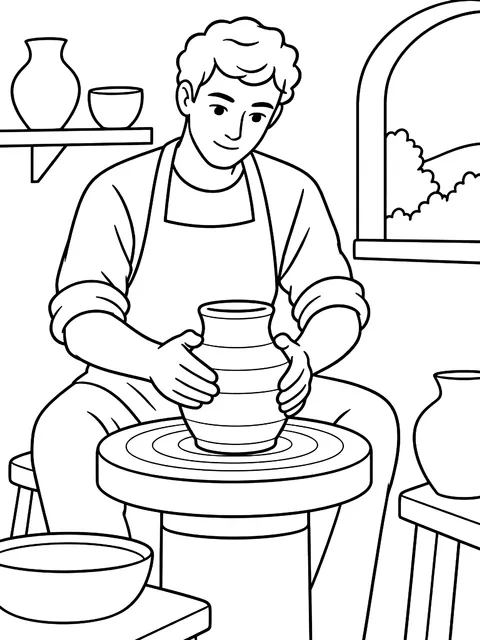 Potter at a wheelMedium
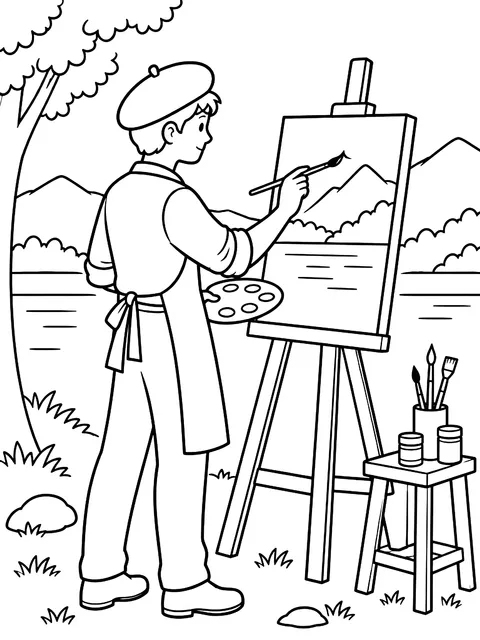 Painter at an easelMedium
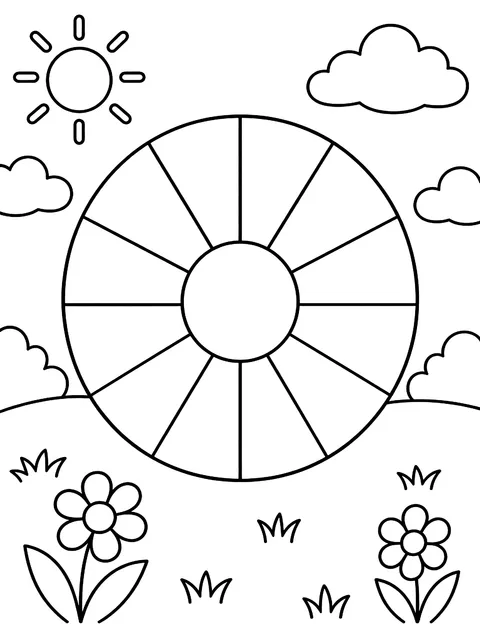 Blank color wheelMedium
 Easel with a blank canvasEasy
 Empty gallery frame to fillEasy
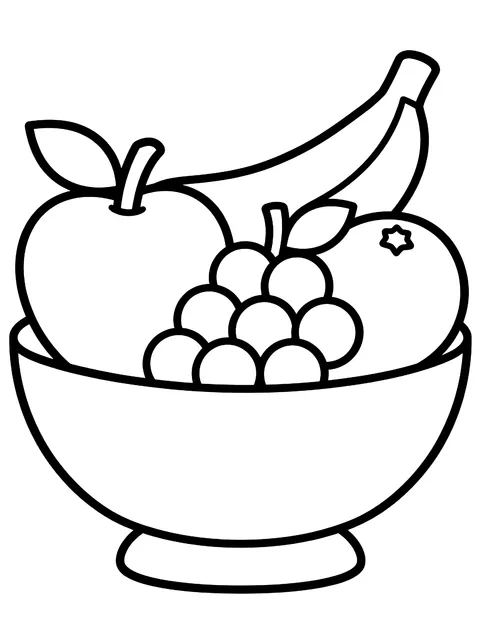 Fruit bowl still lifeEasy
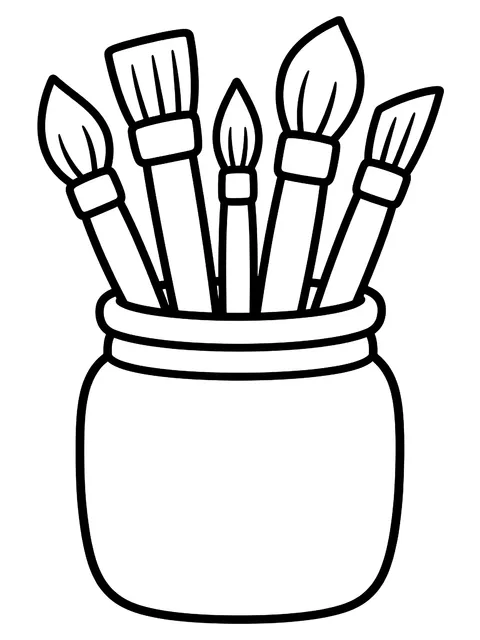 Jar of brushesEasy
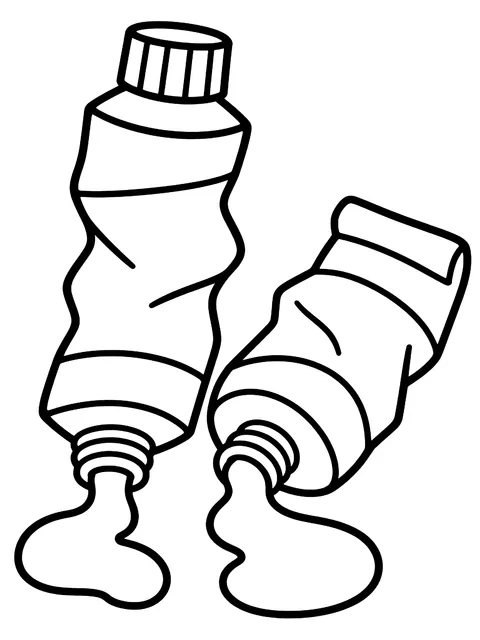 Squeezed paint tubesEasy
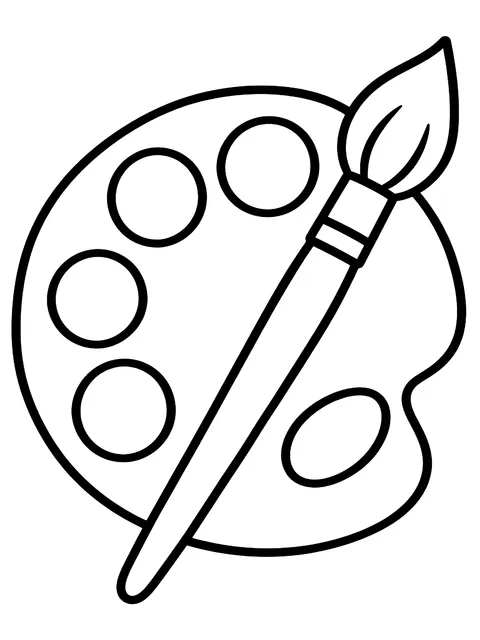 Paint palette with a brushEasy
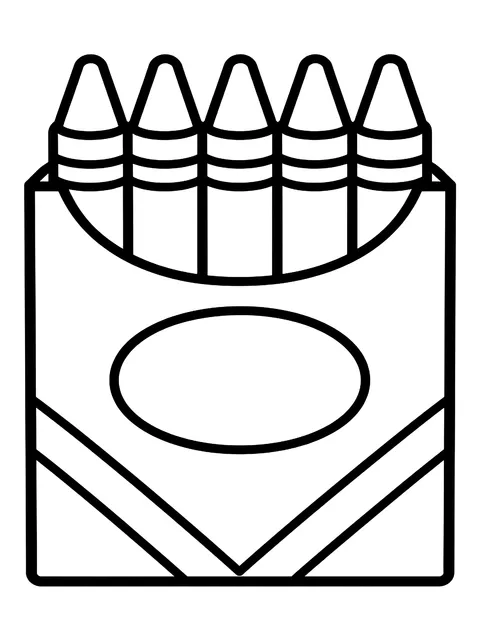 Box of crayonsEasy
Art pages to color
- Art supplies: a jar of brushes, squeezed paint tubes, a palette and a box of crayons
- Color theory sheets: a blank color wheel, a warm-and-cool landscape and a value scale from light to dark
- Still lifes: a fruit bowl, a vase of sunflowers and a table with a jug and lemons
- Dot painting: a landscape drawn as empty circles to fill one dot at a time
- Cubist pages: a face and a guitar broken into angular pieces seen from several sides at once
- Pop style: a sneaker repeated in a grid with thick outlines, ready for four different color schemes
- Stained glass: a bird divided by heavy black lines
- In the studio: a painter at an easel, a potter at a wheel and a gallery wall with visitors
Lessons you can teach with art coloring pages
The color wheel. In the traditional wheel used in art class, the three primary colors are red, yellow and blue. Mix two primaries and you get a secondary color: red and yellow make orange, yellow and blue make green, blue and red make purple. Have students color the primaries first, then blend their way around the wheel.
Warm and cool. Reds, oranges and yellows feel warm. Blues, greens and purples feel cool. On the landscape sheet, color the sky warm and the land cool, then swap on a second copy and compare the mood.
Complementary pairs. Colors opposite each other on the wheel are complements: red and green, blue and orange, yellow and purple. Side by side, each makes the other look brighter.
Value. Value means how light or dark a color is. The value scale sheet has a row of boxes to shade from white to the darkest tone one pencil can make.
Dots and cubes. On the dot page, try placing blue dots next to yellow ones and step back. From a distance the eye blends them toward green. On the cubist page, color each shard a different shade of one color.
Art teachers use these as warm-ups, sub plans and early-finisher work. At home, they're a way into talking about how pictures are made.
Frequently asked questions
Are these art coloring pages free?
Yes. All art coloring pages are free to download and print for personal and classroom use.
Are these copies of famous paintings?
No. The pages borrow techniques from art history, such as dots, geometric shards and bold outlines, but every picture is our own. We don't reproduce specific artworks.
What grade are these art coloring pages for?
The supply pages suit preschool and kindergarten. Color wheel, warm-and-cool and value sheets match elementary art lessons for grades 2 to 6. The technique pages work for middle school and up.
What should I use on art pages to color?
Whatever the lesson calls for. Crayons and markers are fine for most sheets. The color wheel works best with paint or watercolor pencils, since you can mix the secondary colors on the page.