Science Coloring Pages
Science coloring pages turn a diagram into something kids remember. This set covers lab gear like beakers and microscopes, scientists at work in the lab and in the field, and classroom diagrams: the water cycle, the planets, a plant cell and the life cycle of a butterfly. Use them as lesson openers, notebook pages or review sheets.
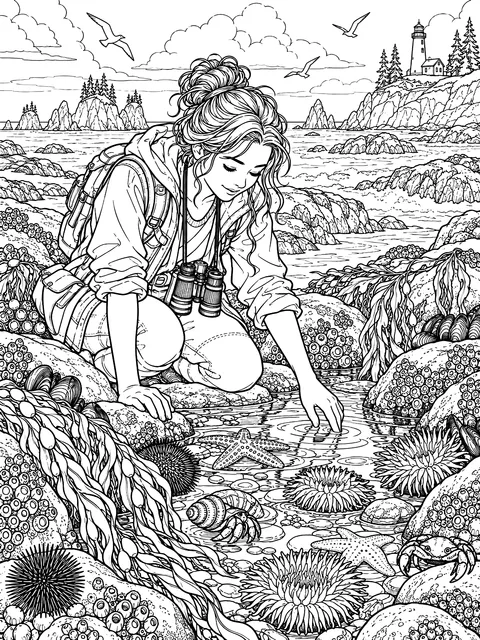 Marine biologist at a tide poolDetailed
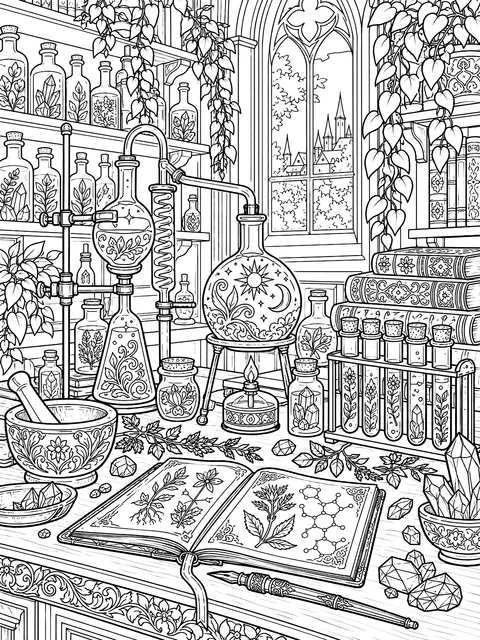 Chemistry lab benchDetailed
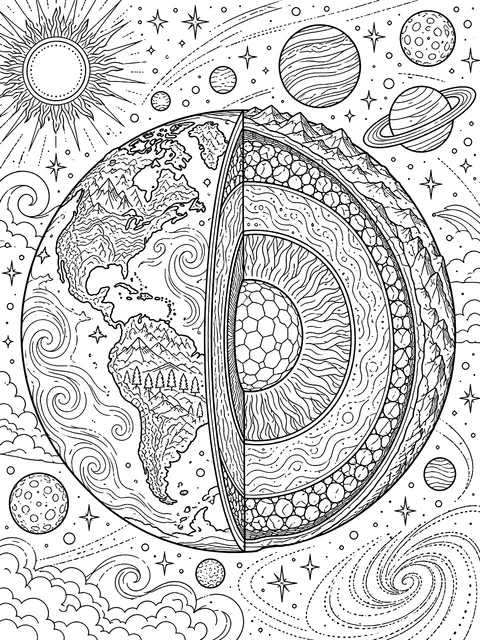 Layers of the EarthDetailed
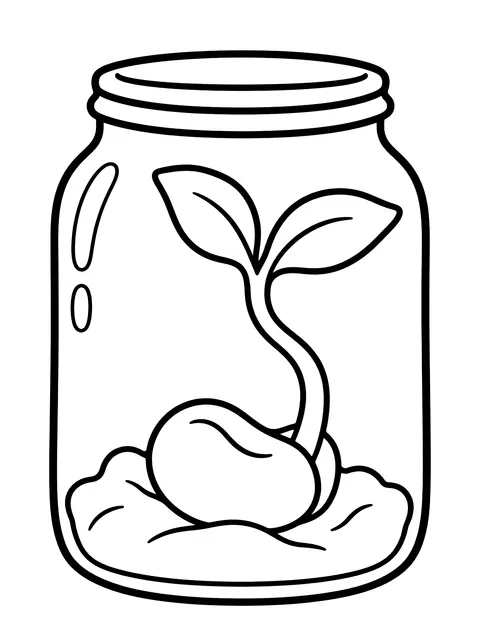 Bean sprouting in a jarEasy
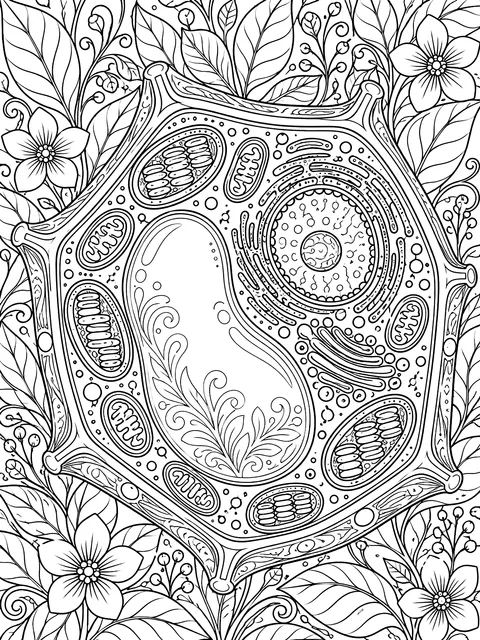 Plant cell diagramDetailed
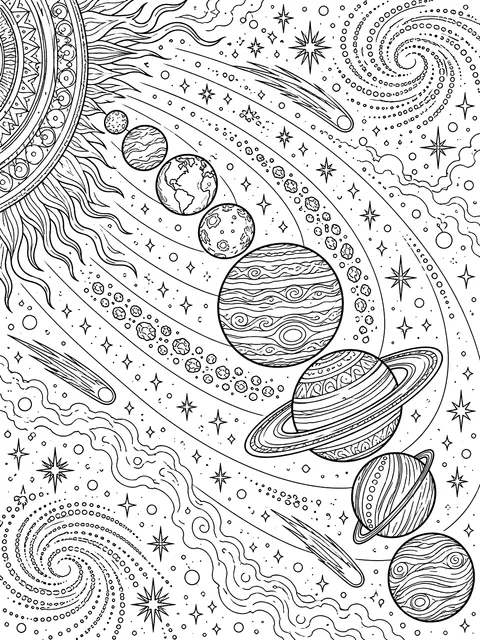 Eight planets in orderDetailed
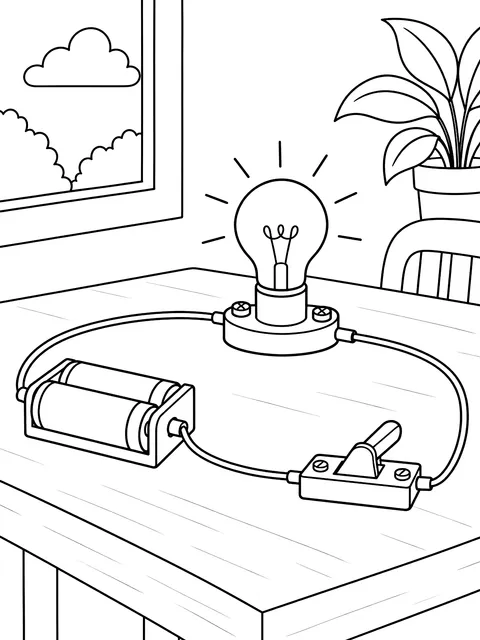 Simple circuit with a bulbMedium
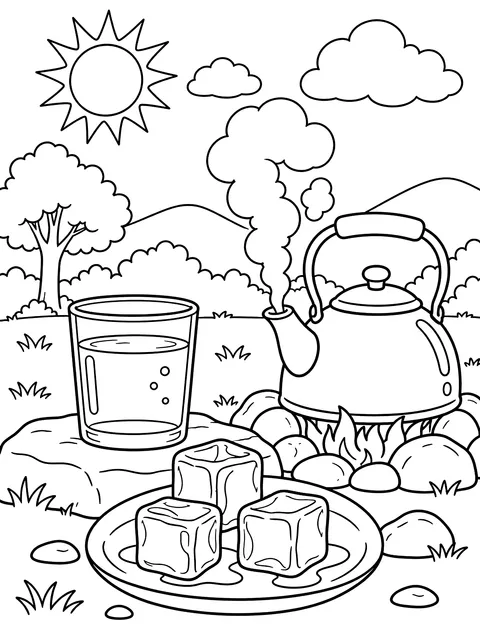 Solids, liquids and gasesMedium
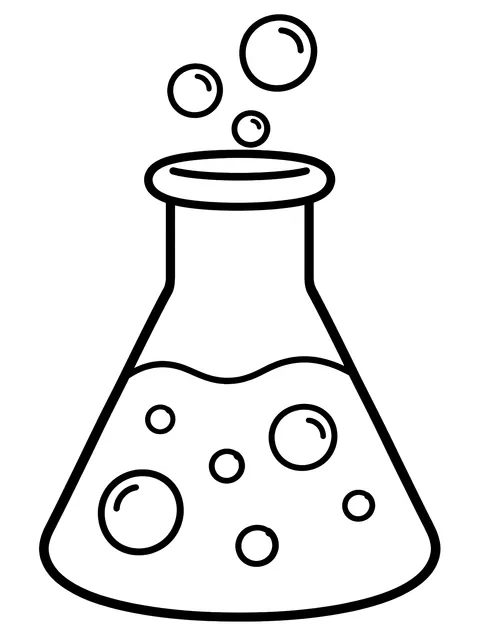 Beaker with bubblesEasy
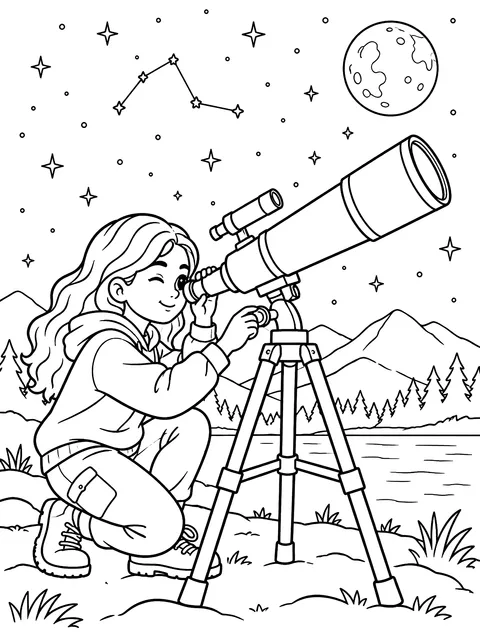 Astronomer at a telescopeMedium
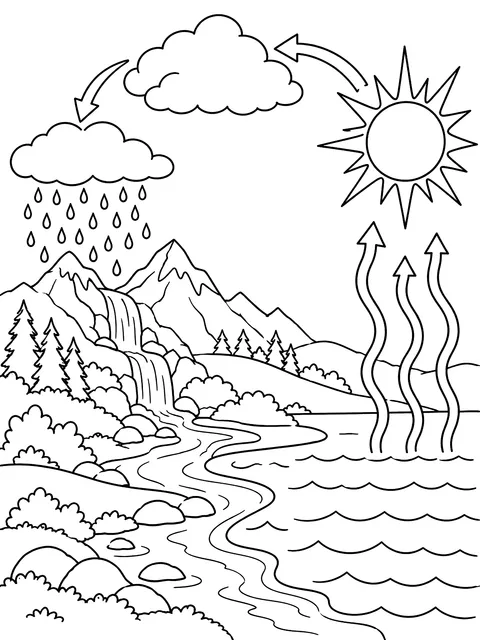 Water cycle diagramMedium
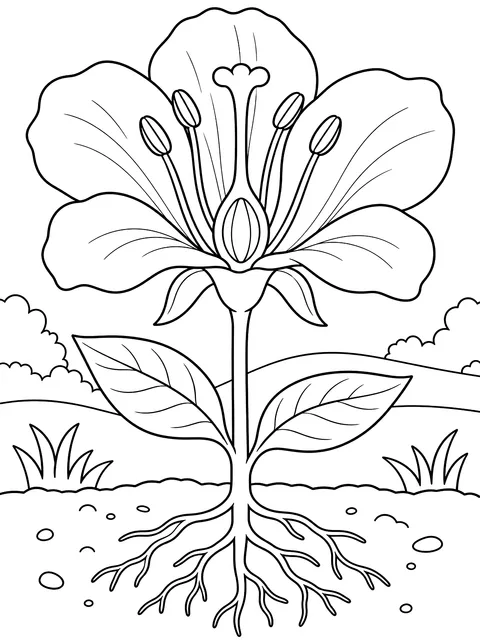 Parts of a flowerMedium
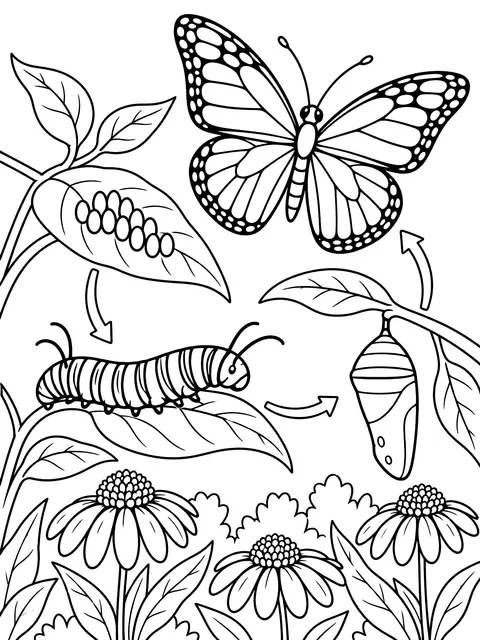 Butterfly life cycleMedium
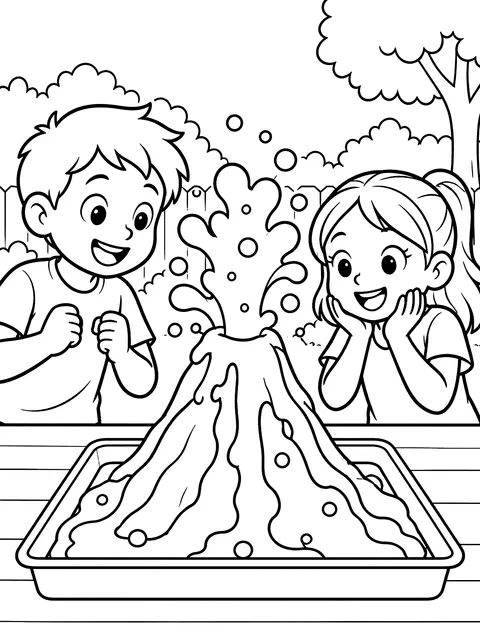 Baking soda volcanoMedium
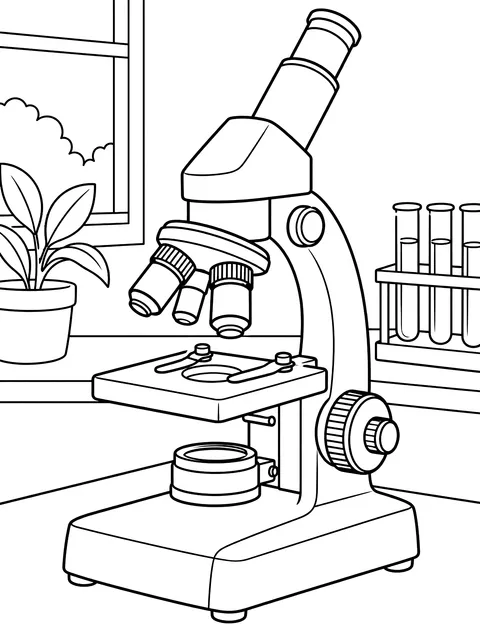 MicroscopeMedium
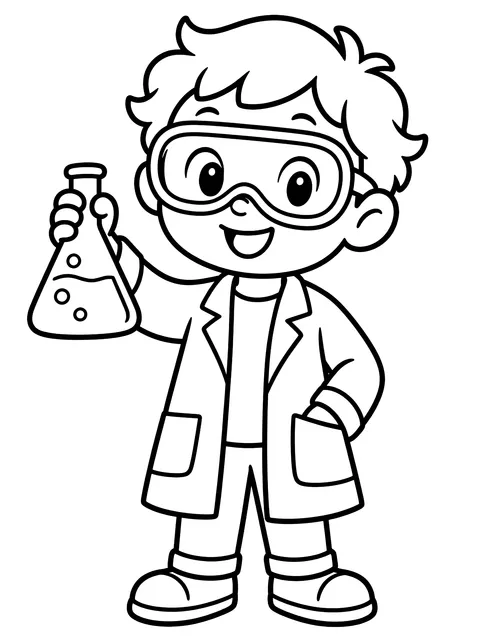 Scientist holding a flaskEasy
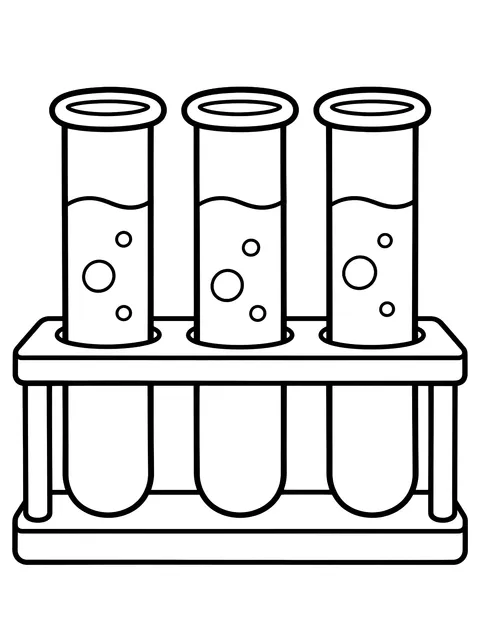 Test tubes in a rackEasy
 Magnifying glassEasy
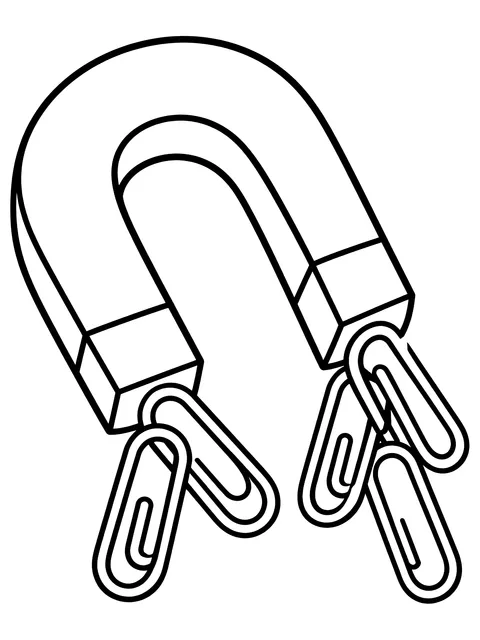 Magnet and paper clipsEasy
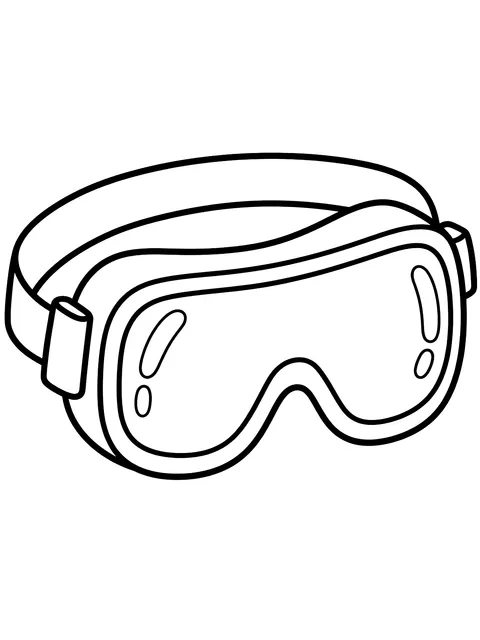 Safety gogglesEasy
Science coloring sheets on this page
- Lab equipment: a beaker, test tubes in a rack, a microscope, safety goggles and a magnifying glass
- Scientists at work: a chemist holding a flask, a marine biologist at a tide pool and an astronomer at a telescope
- Earth science: the water cycle and the layers of the Earth
- Life science: a plant cell, the parts of a flower and the butterfly life cycle
- Space: the eight planets in order from the Sun
- Physical science: a magnet with paper clips, a simple circuit with a bulb, and solids, liquids and gases
- Kitchen experiments: a baking soda volcano and a bean sprouting in a jar
How to teach with science coloring pages
A coloring diagram works best when color carries meaning. Give students a key before they start.
Water cycle. Color the evaporation arrows orange for heat, the clouds gray and the precipitation blue. The four stages to label are evaporation, condensation, precipitation and collection.
Planets. From the Sun outward the order is Mercury, Venus, Earth, Mars, Jupiter, Saturn, Uranus, Neptune. Have students color the four rocky planets one way and the four giant planets another.
Butterfly life cycle. Four stages: egg, caterpillar (larva), chrysalis (pupa) and adult. Number them on the page and draw arrows in a circle.
States of matter. Draw particles packed tightly in the solid, loosely in the liquid and spread far apart in the gas.
Layers of the Earth. Crust, mantle, outer core and inner core, from the outside in.
After coloring, cut the labels off and use the page as a quiz, or glue it into a science notebook. In younger grades, the lab equipment and scientist pages pair well with a safety talk: goggles on, hair tied back, never taste anything in a lab.
Frequently asked questions
Are these science coloring pages free?
Yes. All science coloring pages are free to download and print for personal and classroom use.
Do you have a scientist coloring page that isn't a man in a lab coat?
Yes. The scientists here are women and men of different ages and backgrounds. Some wear lab coats. Others wear waders, hard hats or hiking boots, because a lot of science happens outdoors.
What grade are these science coloring sheets for?
The equipment and experiment pages suit kindergarten through grade 2. The labeled diagrams match topics usually taught in grades 3 through 6.
Can I get a science coloring page for a topic that isn't here?
Yes. Describe it in the AI Coloring Page Generator, for example "a simple food chain with grass, a rabbit and a fox." Check any generated diagram against your textbook before handing it out.