Emotions Coloring Pages
Naming a feeling is the first step to handling it, and young children often don't have the words yet. These emotions coloring pages put a face to each one: happy, sad, angry, scared, surprised, proud, shy, tired and calm. There are single-feeling sheets, a chart of faces, a blank face to draw on and a daily check-in page.
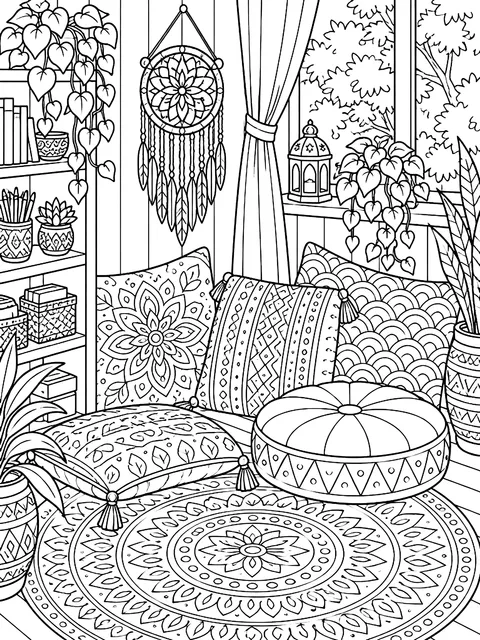 Calm-down corner with cushionsDetailed
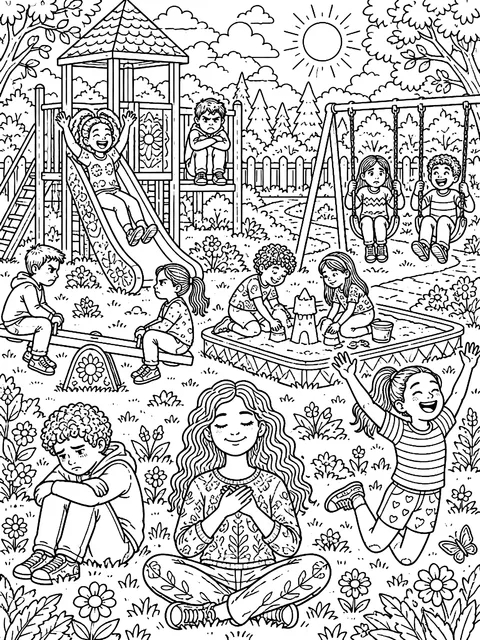 Playground scene with many feelingsDetailed
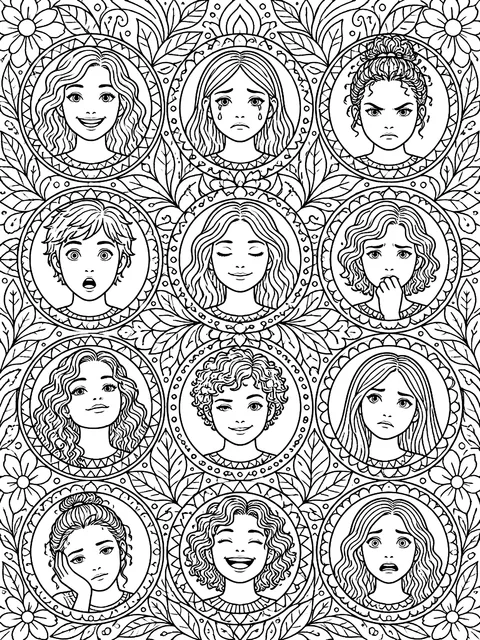 Feelings chart with twelve facesDetailed
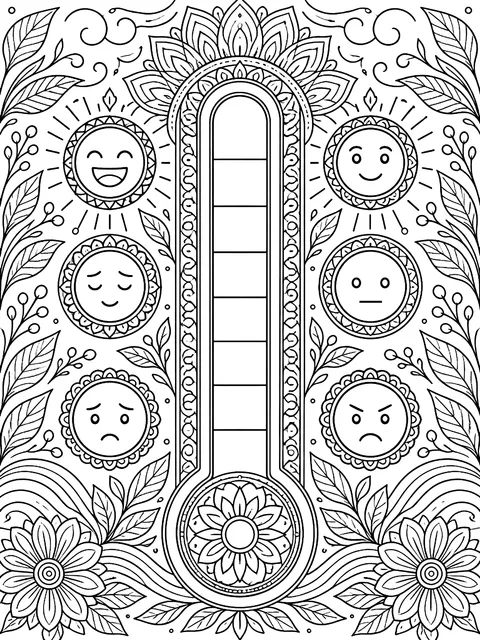 Feelings thermometerDetailed
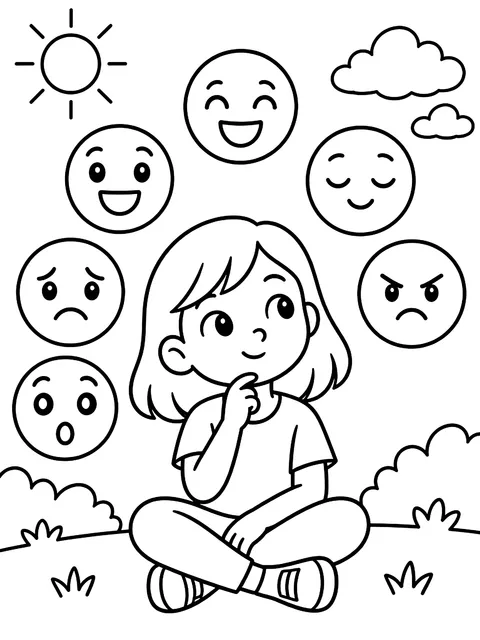 Today I feel check-in sheetMedium
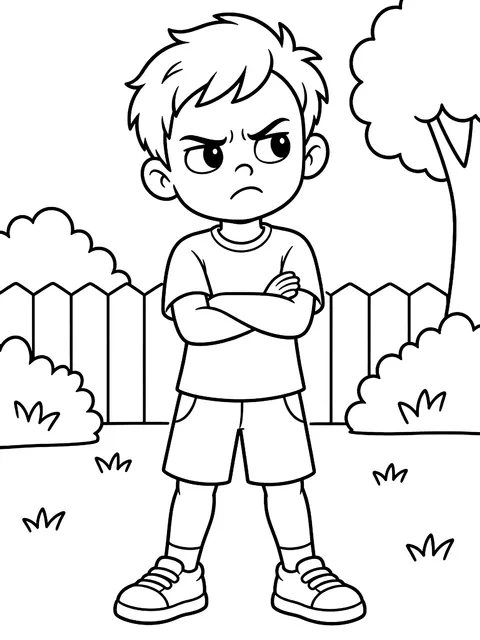 Frustrated kid with crossed armsMedium
 Breathing star to traceMedium
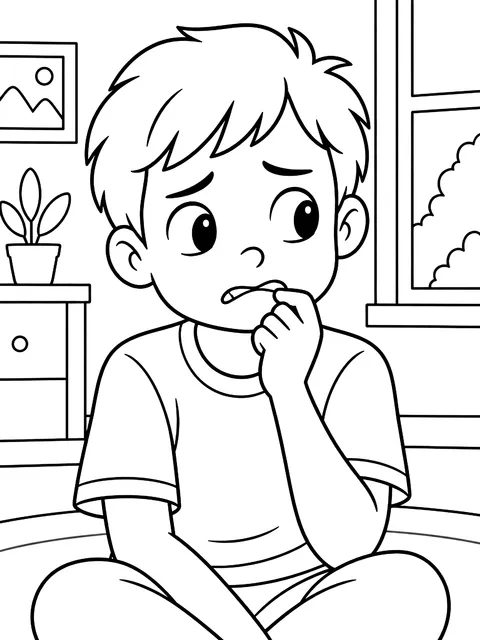 Worried kid biting a lipMedium
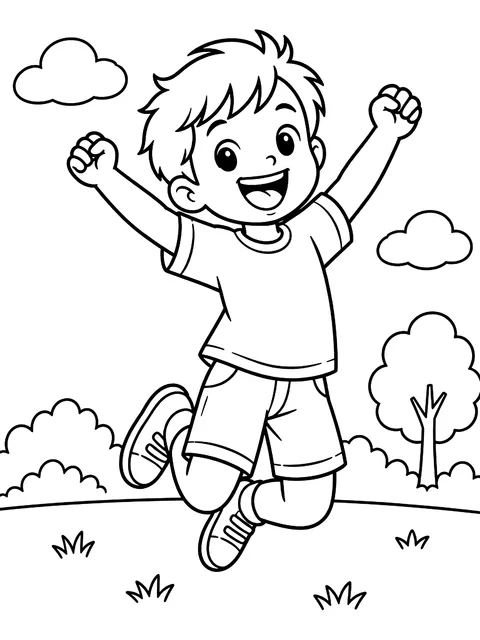 Excited kid jumpingMedium
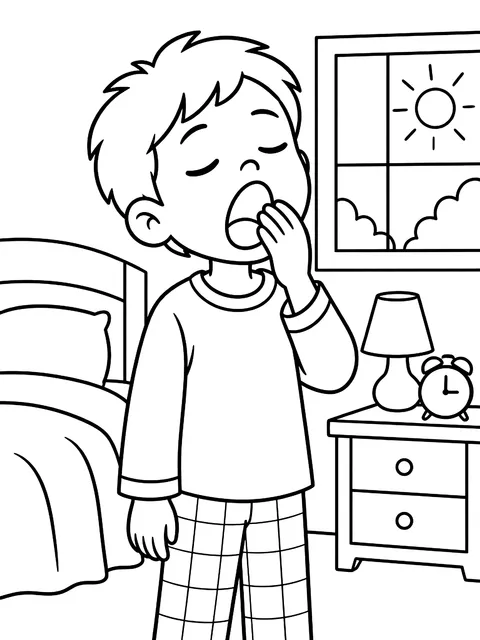 Tired kid yawningMedium
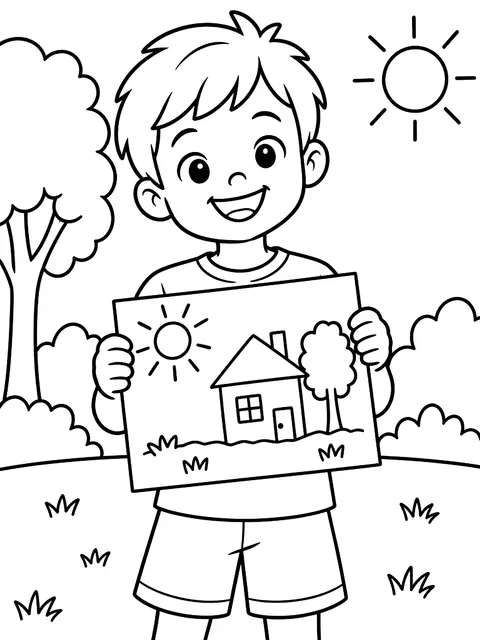 Proud kid holding a drawingMedium
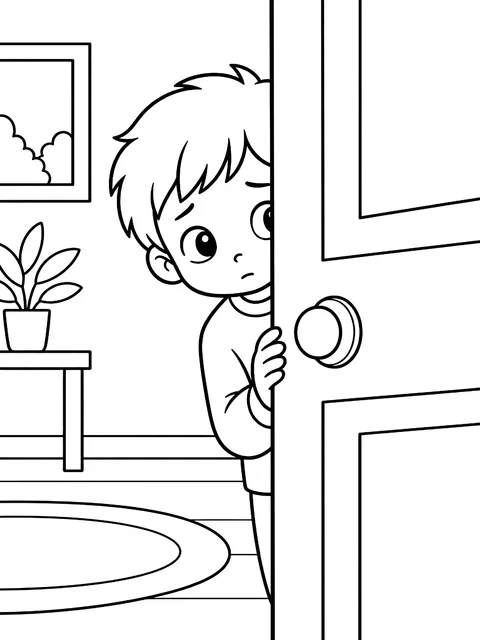 Shy kid peeking from behind a doorMedium
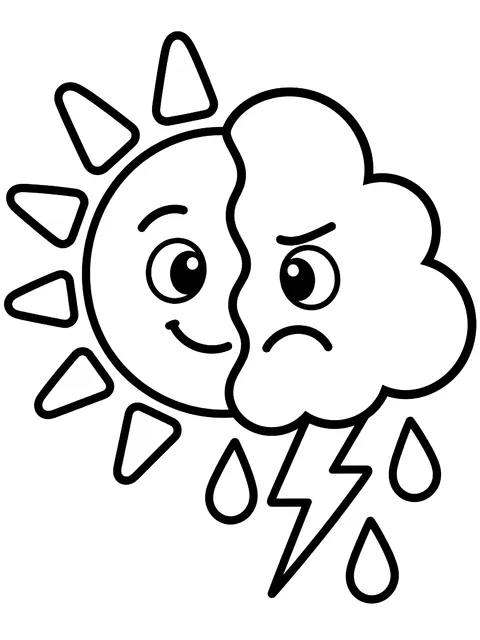 Sunny and stormy weather feelingsEasy
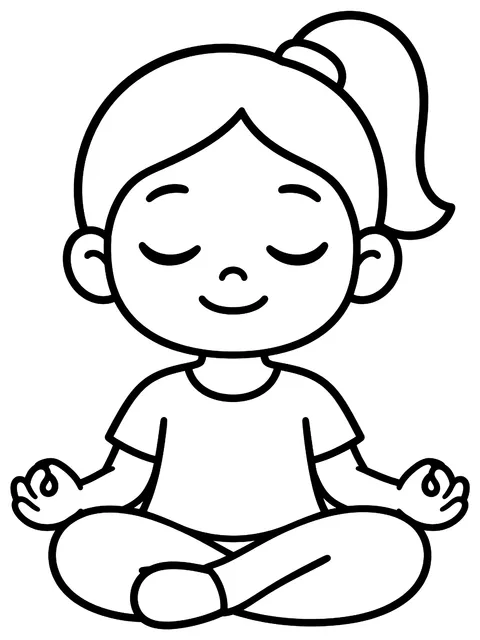 Calm faceEasy
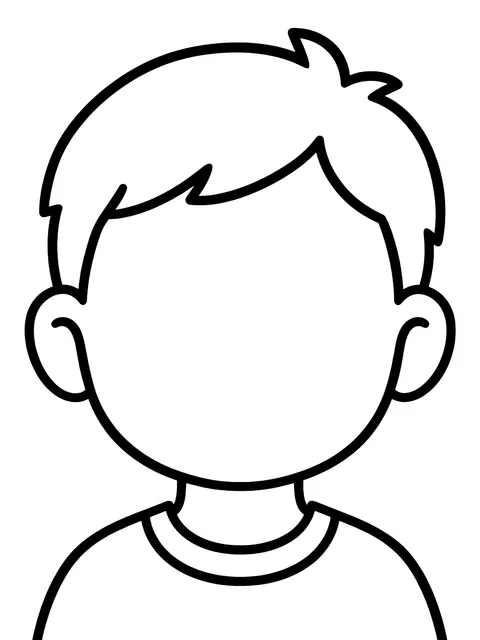 Blank face to draw a feelingEasy
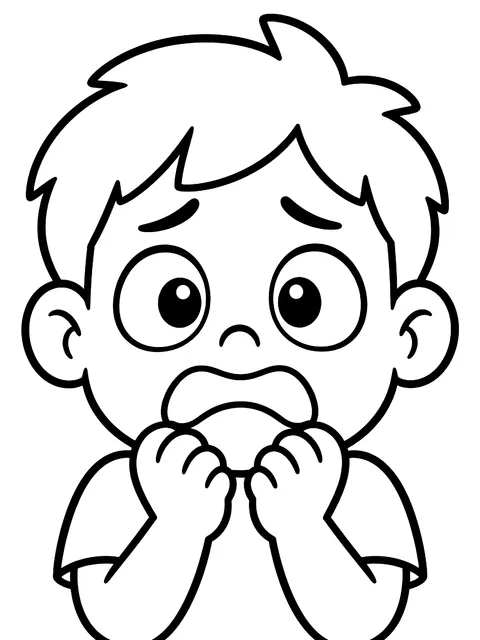 Scared faceEasy
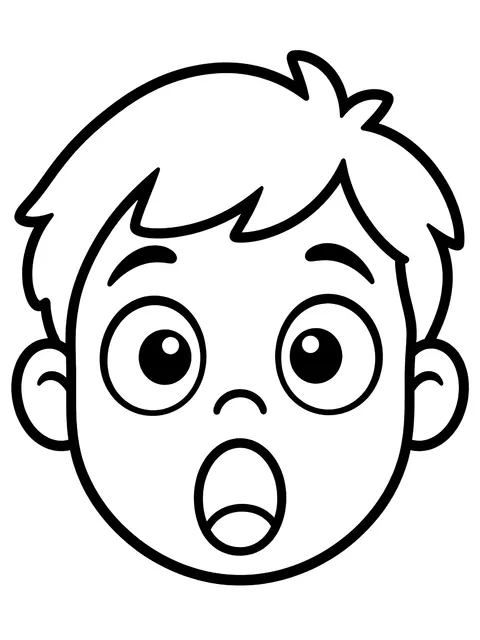 Surprised faceEasy
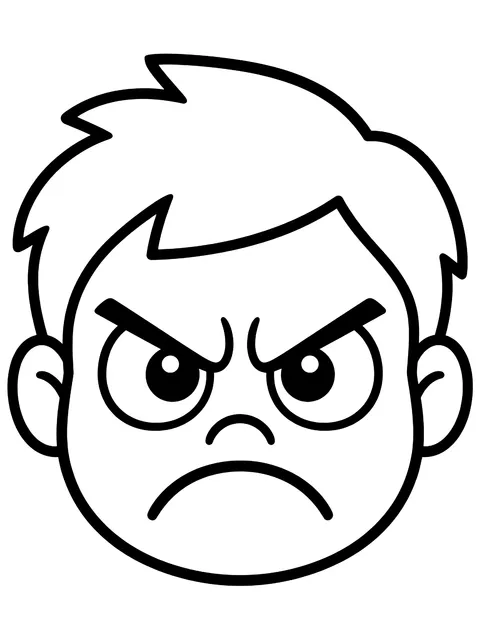 Angry faceEasy
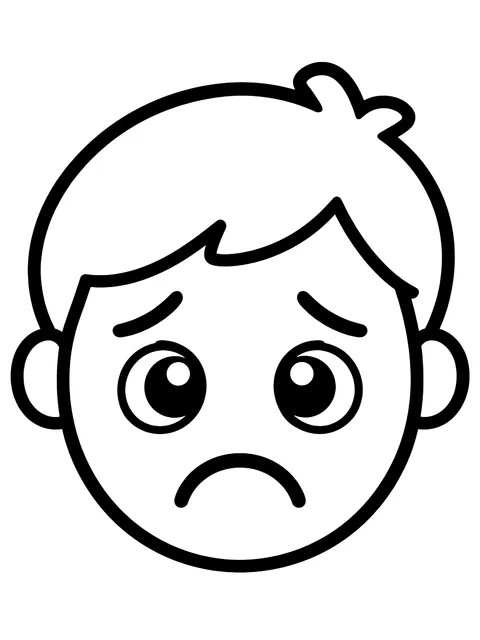 Sad faceEasy
 Happy faceEasy
Emotions coloring sheets in this set
- One feeling per page: a large face showing happy, sad, angry, scared, surprised or calm, with the word underneath
- Feelings chart: twelve small labeled faces on one sheet for the wall or a calm-down corner
- Blank face: an empty head outline where a child draws the eyes, eyebrows and mouth
- Body clues: a frustrated kid with crossed arms, a shy kid peeking from behind a door and an excited kid jumping
- Check-in sheet: a page that says "Today I feel" with a face to draw and a line to write on
- Feelings thermometer: a tall gauge to color from calm at the bottom to very upset at the top
- Weather feelings: sunny and stormy pictures as a gentler way to describe a mood
- Breathing star: a five-point star to trace with a finger while breathing in and out
How to use emotions coloring pages
Teach the vocabulary. Start with four feelings: happy, sad, angry and scared. Most three- and four-year-olds can learn to recognize those. Add surprised, proud, shy, frustrated, worried and calm as children get older.
Read the face. Before coloring, ask what the eyebrows, eyes and mouth are doing. Angry eyebrows point down toward the nose. Surprised eyebrows lift and the mouth opens. Sad mouths turn down. Kids who can spot these clues on paper get better at spotting them on people.
Let color mean something. Ask a child to choose a color for each feeling and explain why. There's no correct answer. One kid's angry is red and another's is black.
Daily check-in. In many classrooms, students color or circle a face when they arrive. It takes a minute and tells a teacher who might need a quiet word.
After a hard moment. Once a child is calm, the blank face page lets them draw how they felt. For a lot of kids that's easier than talking. Follow up with, "What could help next time?"
The thermometer. Color more sections as feelings get bigger. Pair each level with a strategy, such as taking a drink of water, squeezing a pillow or asking for a hug.
School counselors, speech therapists and parents all use pages like these as a starting point for conversation. If a child seems sad, worried or angry most of the time, bring it up with a pediatrician or school counselor.
Frequently asked questions
Are these emotions coloring pages free?
Yes. All emotions coloring pages are free to download and print for personal and classroom use.
Which emotions are included?
Happy, sad, angry, scared, surprised, calm, proud, shy, tired, worried, excited and frustrated. The feelings chart shows all twelve on one sheet.
What age are emotions coloring sheets for?
Ages 3 to 8 get the most from them. The single-face pages suit preschoolers, and the check-in and thermometer sheets work through second or third grade.
Can I use these emotion coloring pages in counseling sessions?
Yes. Counselors, therapists and teachers can print as many copies as they need for their students and clients.