Solar System Coloring Pages
These free solar system coloring pages put the sun and its eight planets on paper, one at a time and all together. Print a full lineup from Mercury to Neptune, a single page for each planet, or an orbit map with blank labels to fill in. They work for a science unit, a bedroom wall or a rainy afternoon.
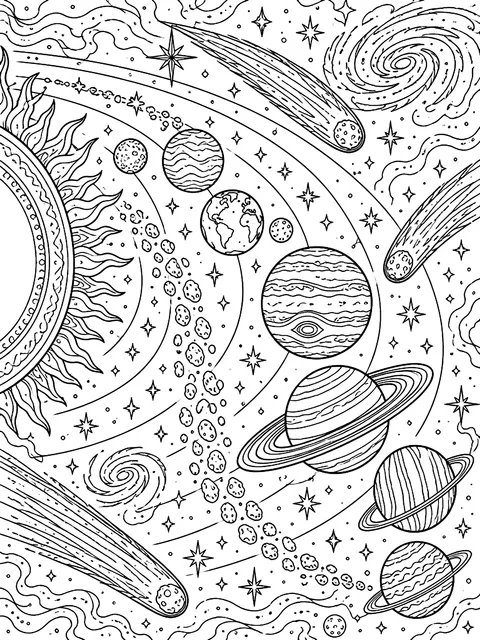 Detailed solar system with cometsDetailed
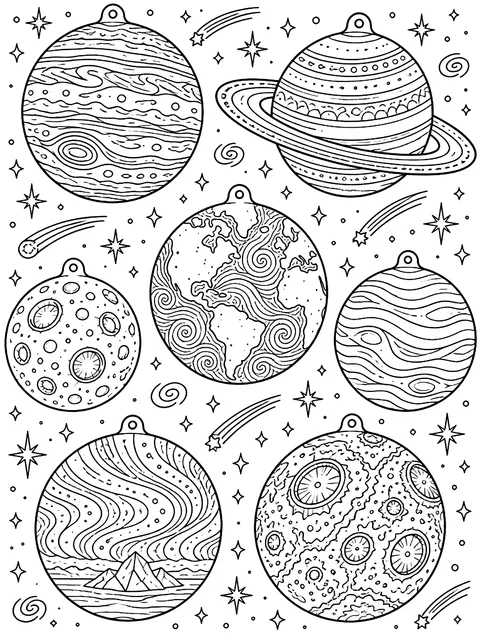 Planet cut-outs for a hanging mobileDetailed
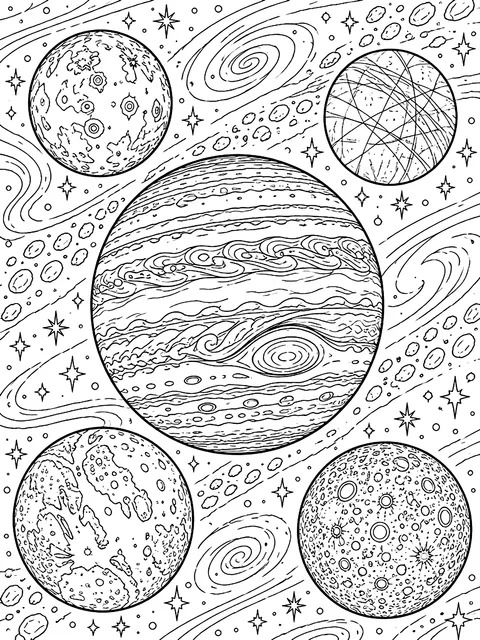 Jupiter and its four largest moonsDetailed
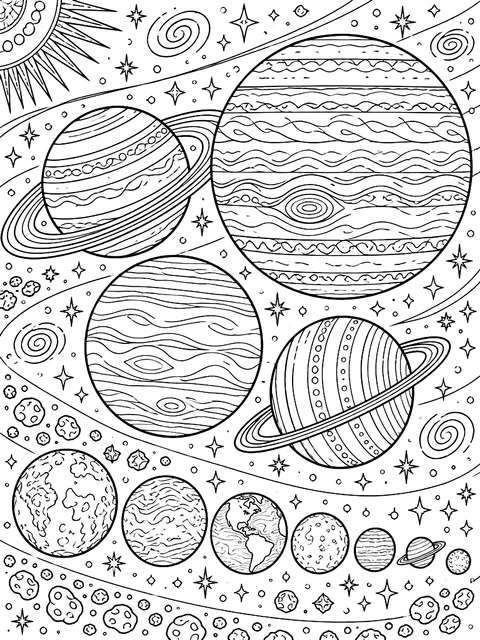 Planets compared by sizeDetailed
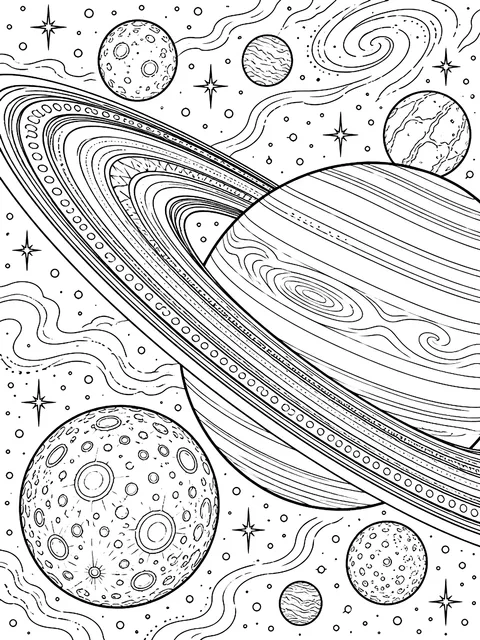 Close-up of Saturn's rings and moonsDetailed
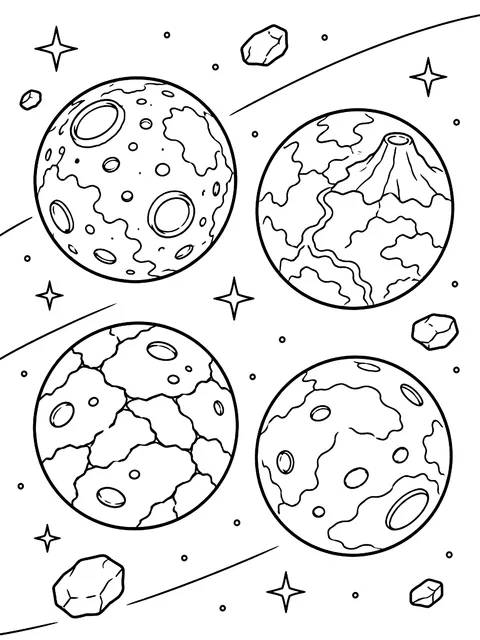 The four rocky planetsMedium
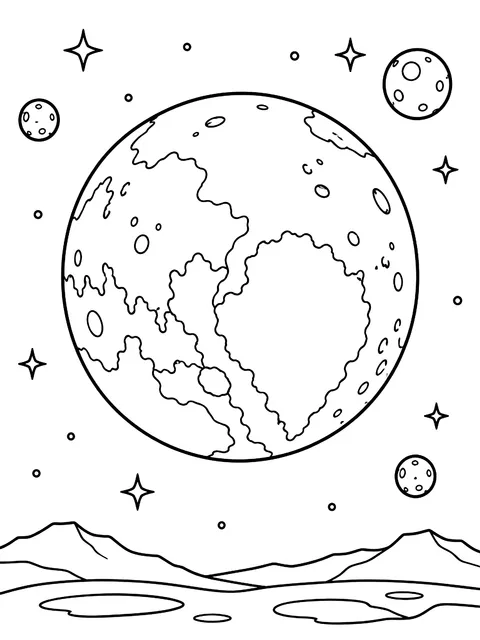 Dwarf planet PlutoMedium
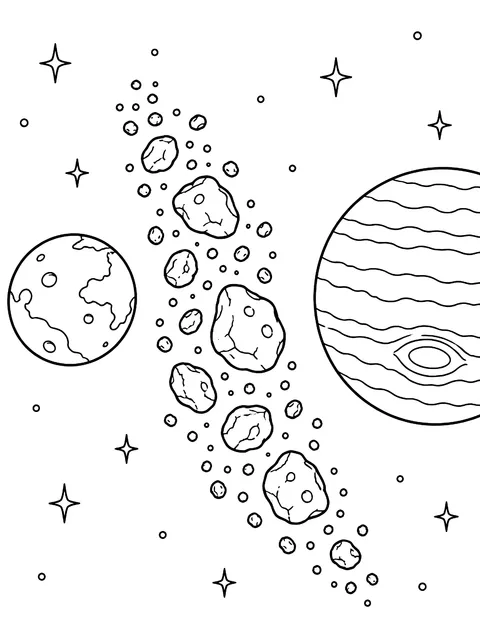 Asteroid belt between Mars and JupiterMedium
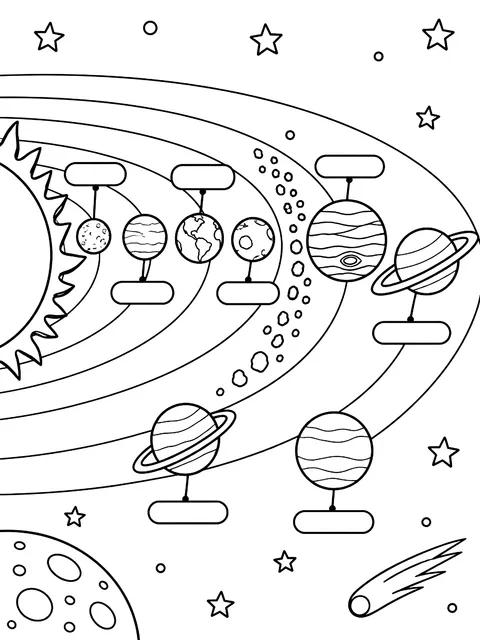 Solar system with blank labelsMedium
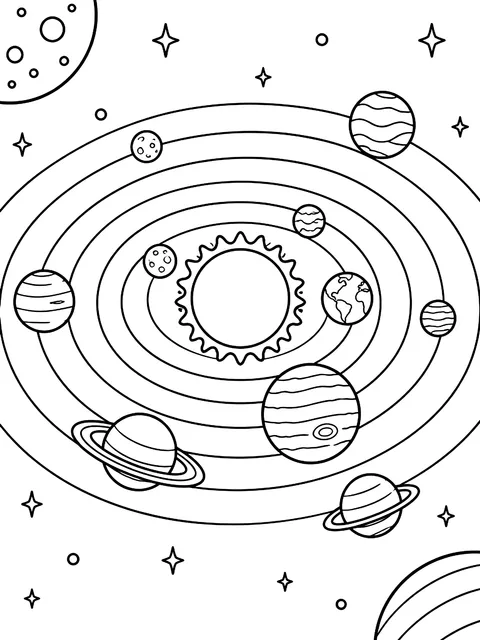 Solar system orbit mapMedium
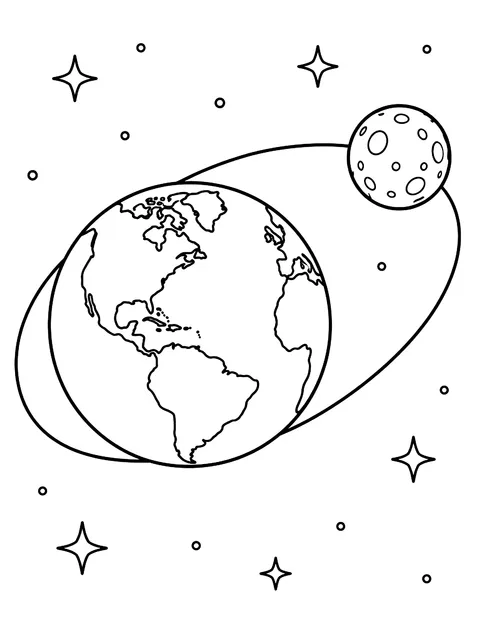 Earth and the moon in orbitMedium
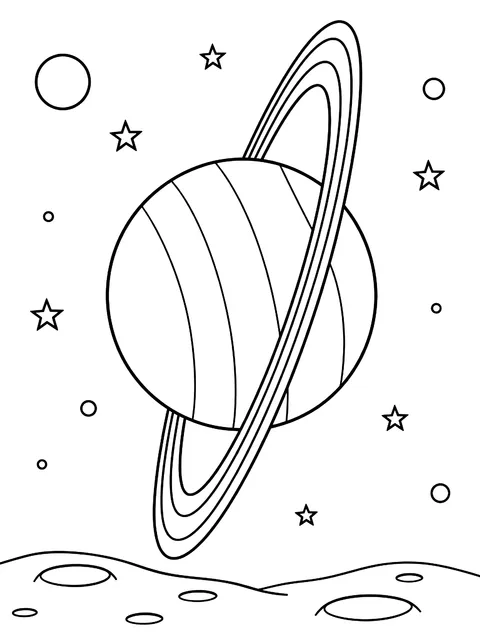 Uranus tipped on its sideMedium
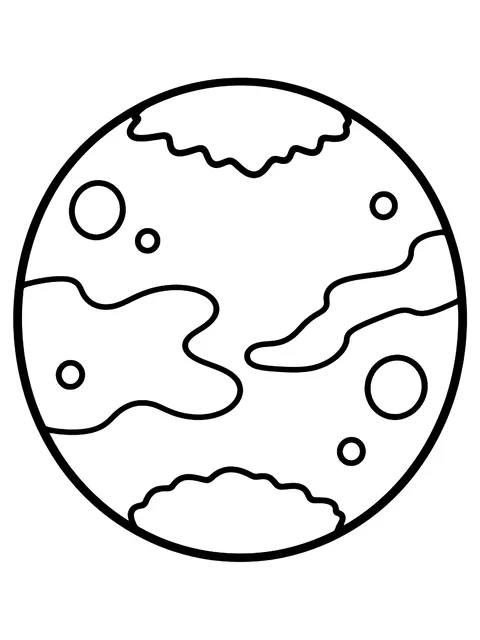 Mars with polar ice capsEasy
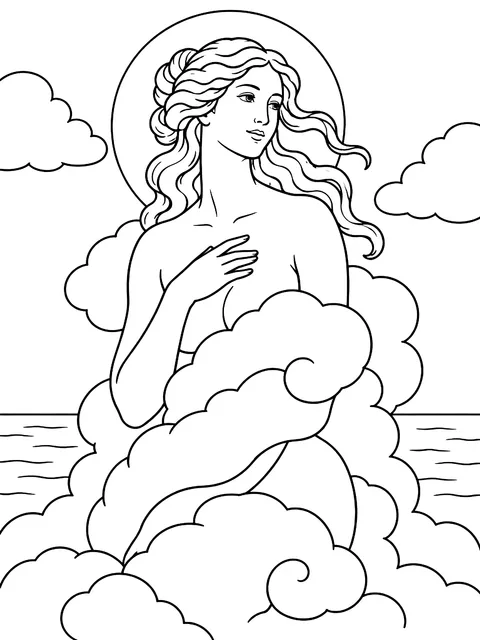 Venus wrapped in cloudsMedium
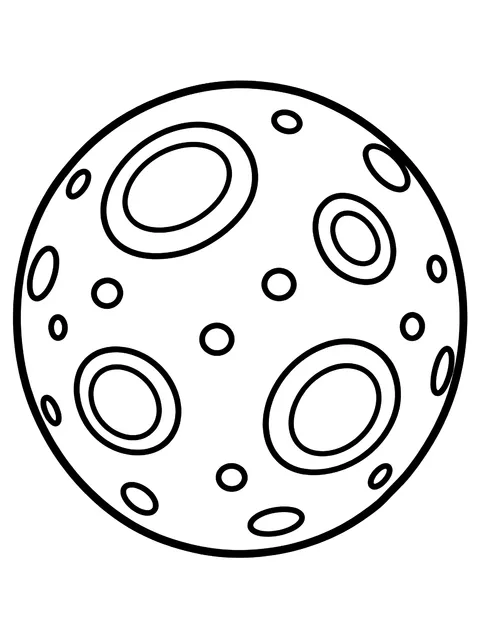 Mercury with cratersEasy
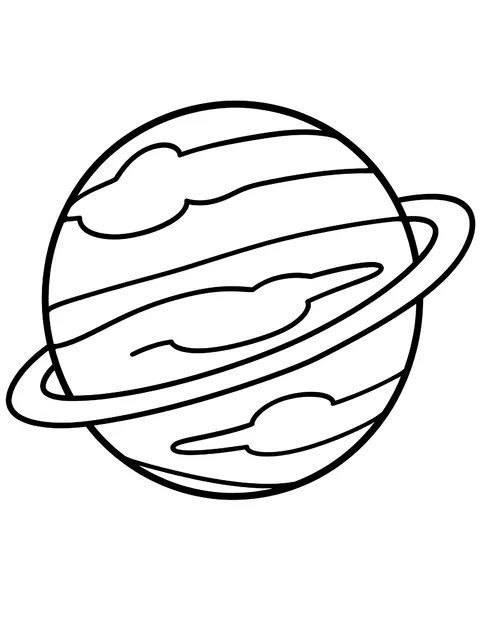 Neptune with cloud streaksEasy
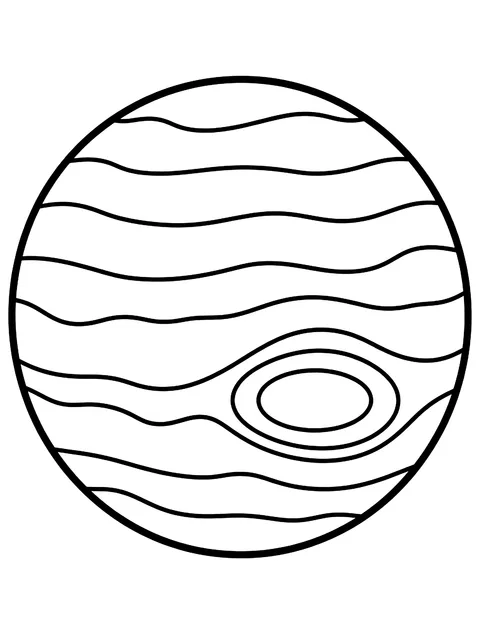 Jupiter with its Great Red SpotEasy
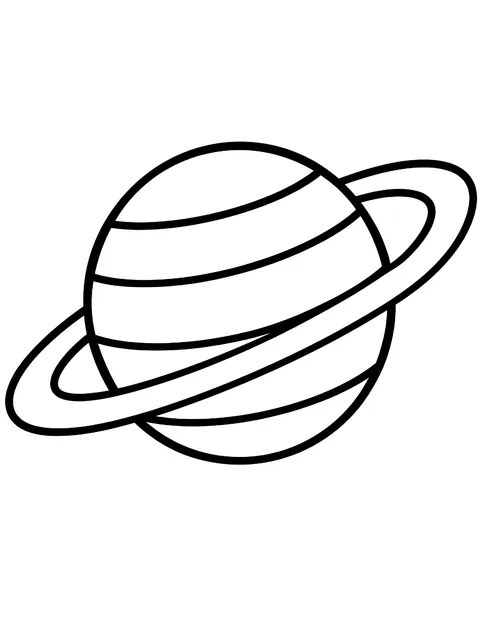 Saturn and its ringsEasy
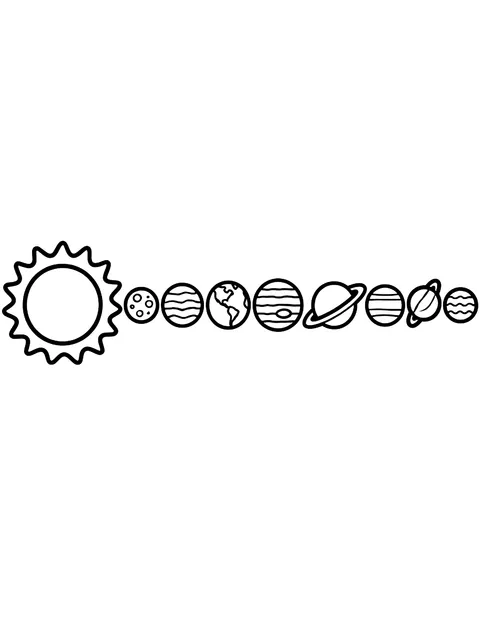 Sun and eight planets in a rowEasy
 The sun with raysEasy
Solar system coloring pages in this set
- The whole lineup: the sun and eight planets in order, shown side by side.
- One planet per page: big enough to add stripes, storms and craters.
- Orbit maps: the planets on their paths around the sun, seen from above.
- Label-it sheets: blank lines next to each planet for writing the names.
- Moons: Earth's moon and the largest moons of Jupiter and Saturn.
- Small bodies: the asteroid belt, comets and the dwarf planet Pluto.
The planets in order, with their real colors
Starting at the sun and moving out:
- Mercury: the smallest planet. Gray and covered in craters, like our moon.
- Venus: wrapped in thick clouds. Pale yellow or cream.
- Earth: blue oceans, green and brown land, white swirls of cloud.
- Mars: rusty orange-red, with white ice caps at the poles.
- Jupiter: the largest planet. Bands of cream, tan and brown, plus the Great Red Spot, a storm wider than Earth.
- Saturn: pale gold, with wide rings made of ice and rock.
- Uranus: pale blue-green. It spins tipped over on its side.
- Neptune: deep blue and very windy. The farthest planet from the sun.
A sentence helps with the order: My Very Educated Mother Just Served Us Nachos. The first four planets are small and rocky. The last four are giants made mostly of gas and ice.
The sun is a star. It holds more than 99 percent of all the mass in the solar system, so on a page drawn to true scale the planets would be specks.
Frequently asked questions
Are these solar system coloring pages free?
Yes. All solar system coloring pages are free to download and print for personal and classroom use.
Can I use these free printable solar system coloring pages for a school project?
Yes. The label-it sheets and the orbit map are the most useful for class. Students can color each planet, write its name, then cut the planets out and arrange them in order on a strip of black paper.
Why isn't Pluto one of the planets?
In 2006 astronomers agreed on a definition of a planet. One rule is that a planet must have cleared other objects out of its orbit, and Pluto shares its zone with many icy bodies. It's now classed as a dwarf planet. We still give it a page of its own.
Which planets have rings?
All four giant planets do: Jupiter, Saturn, Uranus and Neptune. Saturn's rings are the only ones bright enough to see through a small telescope, which is why they're the ones everyone draws. Add faint, thin rings to the other three if you want to be exact.