Toddlers learn by touching, dumping, stacking, banging and moving, so the best activities for toddlers are simple, hands-on and safe. The 30 ideas below are for ages 1 to 3, grouped by type, with safety notes for each group. Toddlers need an adult within arm's reach for almost all of them, since they put things in their mouths and have no sense of danger yet.
Activities for Toddlers: 30 Safe Ideas for Ages 1 to 3
November 10, 2026
Activities for toddlers ages 1 to 3 with safety tips: sensory play, movement, art and quiet time, plus how to avoid choking hazards and when to supervise.
activities for toddlers
toddler activities
toddler activities at home
activities for 2 year olds
activities for 1 year olds
Safety first
Read this before you pick an activity.
- Stay close. Toddlers should never be left alone with small objects, water or art supplies.
- Check for small parts. Anything that fits through a toilet paper tube is small enough to be a choking hazard for a child under three. That includes beads, buttons, coins, pom-poms, small balls, dried beans and some craft items.
- Avoid round, hard foods as materials, like whole grapes, nuts or popcorn, for sensory play or counting games.
- Check for batteries and magnets. Button batteries and small magnets are dangerous if swallowed. Keep them out of activities.
- Use non-toxic materials labeled for young children, such as washable crayons and paint.
- Water play needs constant, close supervision. A toddler can drown in very little water.
- Cords and strings. Skip long strings and ribbons because of strangulation risk.
- Balloons. Popped or chewed balloon pieces are a choking hazard. Avoid them with toddlers.
When unsure about an activity or material, check with your child's doctor or choose a safer alternative.
Sensory play
Sensory play lets toddlers explore textures, sounds and temperatures.
- Water in the sink or tub. Cups, spoons and floating toys, with an adult within reach the whole time.
- Bubbles. Blow bubbles and let them pop and chase.
- Edible sensory bin. Cooked pasta, with large pieces and scoops. Skip dried beans and tiny items.
- Play dough. Squish, roll and poke. Make your own with flour, salt and water. Watch for toddlers who try to eat it.
- Ice cube play. Put large ice cubes in a tub with spoons. Add a few drops of food coloring for color.
- Textured touch bag. Seal fabric scraps, a sponge or a soft brush in a bag and let your toddler feel.
- Finger painting with yogurt. Mix yogurt with a drop of food coloring for a safe, taste-safe paint.
Movement and big muscles
- Dance party. Put on a favorite song and move together.
- Obstacle course. Cushions to crawl over and a tunnel made from a blanket draped over chairs.
- Ball roll and kick. A soft, large ball (bigger than a fist, soft enough to squeeze).
- Animal moves. Crawl like a bear, hop like a bunny, stomp like an elephant.
- Push and pull toys. A box with a rope handle (short, with adult supervision) or a small cart.
- Jumping on a pillow pile. Stack couch cushions on the floor.
- Follow the leader. Copy simple actions: clap, stomp, wave.
Building and stacking
- Stack cups. Plastic cups make towers that are fun to knock down.
- Large blocks. Soft or big wooden blocks.
- Boxes and containers. Put objects in, take them out. Toddlers can do this for a surprisingly long time.
- Nesting toys. Fit smaller ones into bigger ones.
- Simple shape sorters. Choose one with big pieces.
- Cardboard box house. Cut a door and window, and let your child decorate it with crayons.
Art and early drawing
- Chunky crayon scribbling. Tape a big sheet of paper to the table or floor. Washable crayons are best. A scribble is a fine drawing at this age.
- Sticker pictures. Peeling and placing large stickers on paper is a favorite and builds finger skill.
- Water painting. A brush and a cup of water on the sidewalk, a chalkboard or dark paper.
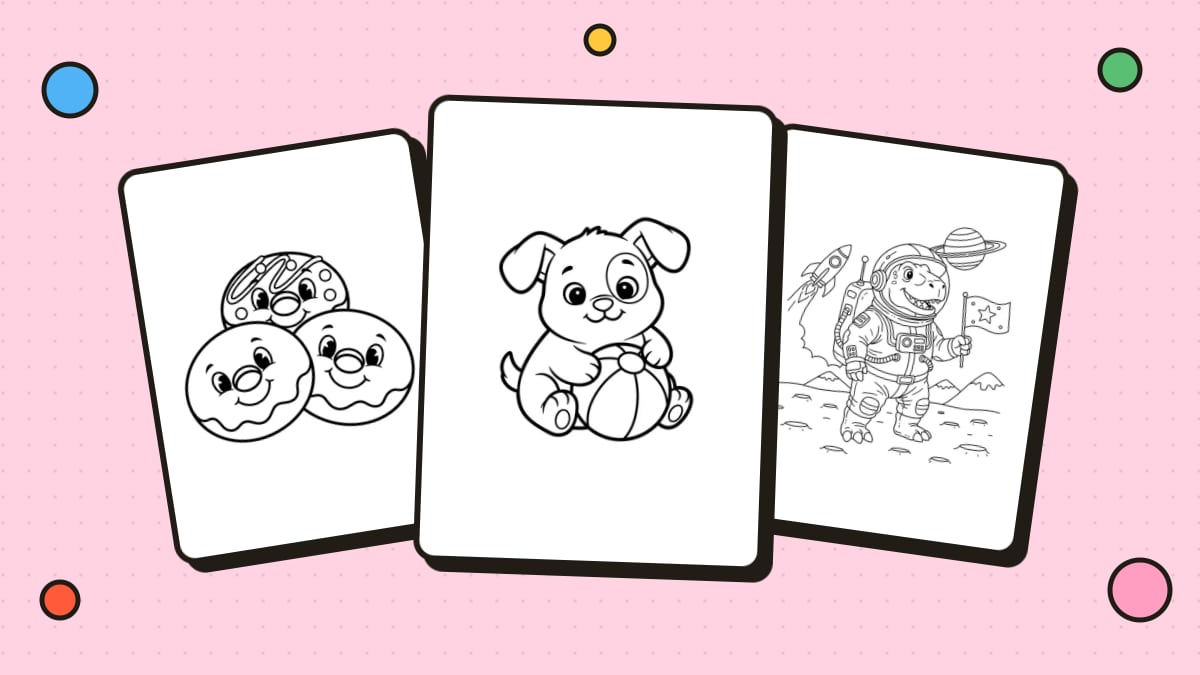
- Coloring pages with big shapes. Pick simple designs with thick lines, like a big circle fruit or a basic animal. Our animal coloring pages and cute coloring pages include some easy options. Expect scribbles, not coloring inside the lines, and stay with your child so the crayon doesn't go into the mouth.
- Handprint art. Trace your toddler's hand on paper and add details with crayon.
Quiet time and language
- Picture books. Choose board books with big pictures. Point to things and name them.
- Songs and rhymes. Nursery rhymes with hand motions are good for language and bonding.
- Naming game. Hold up objects and say the names, then ask your child to point to the one you name.
- Peekaboo and hide-and-find. Hide a toy under a cloth and let your child find it.
- Cuddle and tell a story. Talk about the day or make up a short story about a favorite animal.
Activities by age
| Age | Skills they're working on | Good picks |
|---|---|---|
| 12 to 18 months | Pulling to stand, pincer grasp, imitation | Stacking cups, board books, simple shape sorters, pushing toys |
| 18 to 24 months | Walking steadily, scribbling, naming things | Chunky crayons, ball play, bubbles, dancing |
| 2 to 3 years | Running, climbing, pretend play, more words | Obstacle course, play dough, sticker scenes, simple coloring |
These are rough ranges. Every toddler is different, and the right activity is the one your child enjoys and handles safely.
Making activities last
- Keep sessions short. Five to ten minutes is normal. Don't worry if your toddler walks away.
- Rotate toys. Keep a few out and swap them every week or so.
- Repeat favorites. Toddlers love doing the same thing again and again, and repetition is how they learn.
- Join in. Your attention matters more than the activity.
- Follow their lead. If they want to put the blocks in a bag rather than stack them, that is play too.
- Expect mess. Use a tablecloth, a large sheet or a bath towel under the high chair.
Rainy days and long afternoons
When you're stuck inside, combine a movement activity with a quiet one. A dance party followed by water play followed by a book is a solid afternoon. For more ideas, see rainy day activities for kids and indoor activities for kids, which include options for older siblings too.
Coloring with toddlers
Toddlers don't color in the lines, and that is fine. What they are doing is learning to hold a crayon, make marks and see what happens. Use thick washable crayons, tape the paper down, and keep sessions short. A printed page from the coloring pages library gives them an outline to scribble on, or you can leave a blank page and draw alongside them. As they grow, move on to preschool activities and fine motor activities.
You can also make a custom page of a favorite animal or toy with the AI coloring page generator. It uses credits, so it is better for a special occasion than for daily use.
Related Posts
Oct 20, 2026
What Colors Make Black? How to Mix Black Paint
What colors make black? Mix dark complementary colors or all three primaries. The best combinations, warm and cool blacks, and crayon tips.
Oct 10, 2026
How to Make a Coloring Book: A Simple Step-by-Step Guide
Learn how to make a coloring book at home: pick a theme, create or collect pages, set the right size, then print and bind it. Plus tips before you sell one.
Nov 7, 2026
Easy Crafts for Kids: 30 Simple Ideas by Prep Time
Easy crafts for kids sorted by prep time: five-minute crafts, recycled crafts, and projects for ages 3 to 10, with materials you likely have at home.