Snow Coloring Pages
Our free snow coloring pages are all about the white stuff itself: single snowflakes with six arms, heavy flakes falling past a street lamp, pine branches bending under fresh snow and footprints across an empty yard. They're a calm choice for a snow day, and a good way to talk about weather in places where snow never falls.
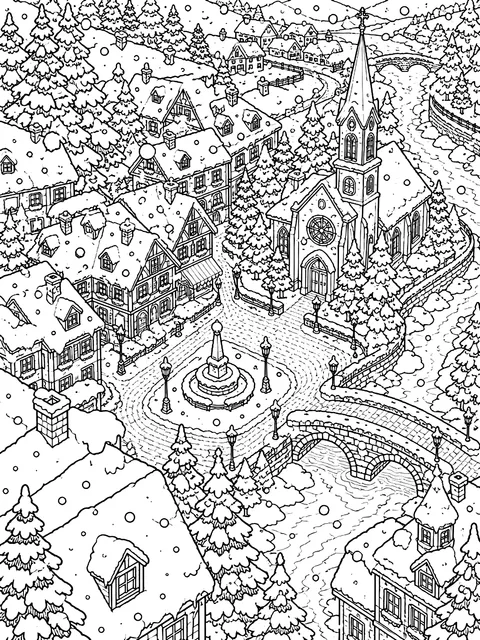 Town in a snowstorm seen from aboveDetailed
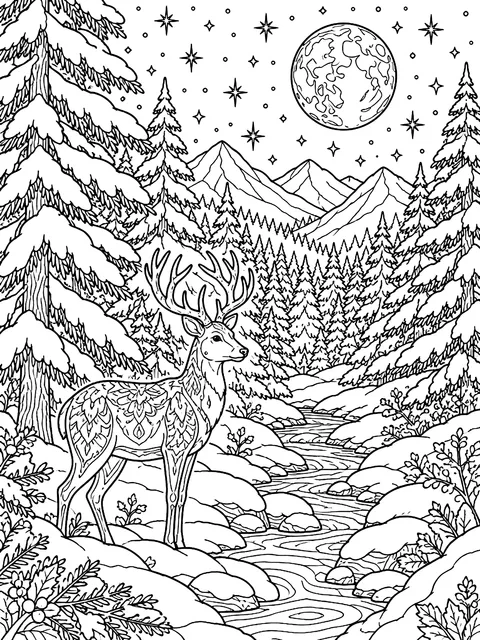 Snowy forest at nightDetailed
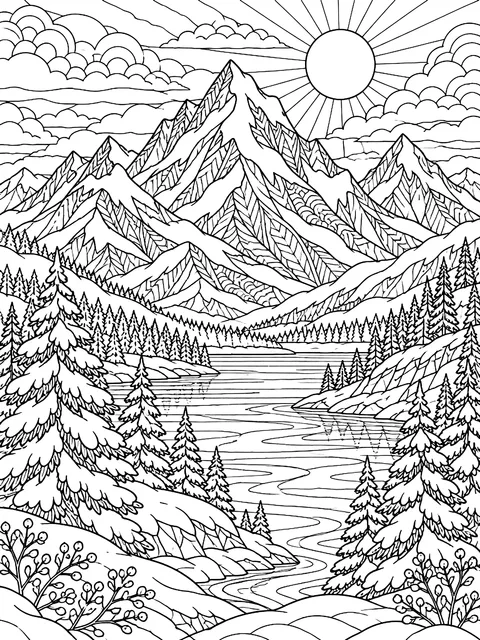 Snowy mountain rangeDetailed
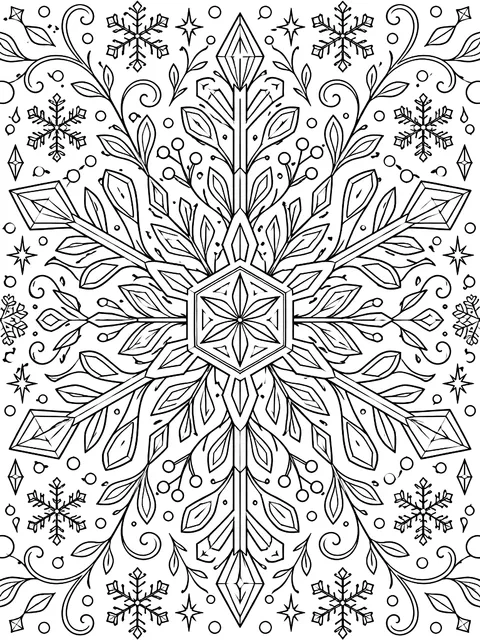 Snow crystal mandalaDetailed
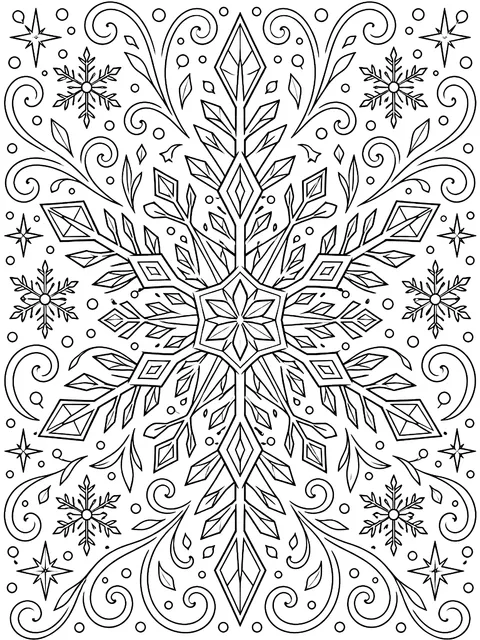 Intricate snowflakeDetailed
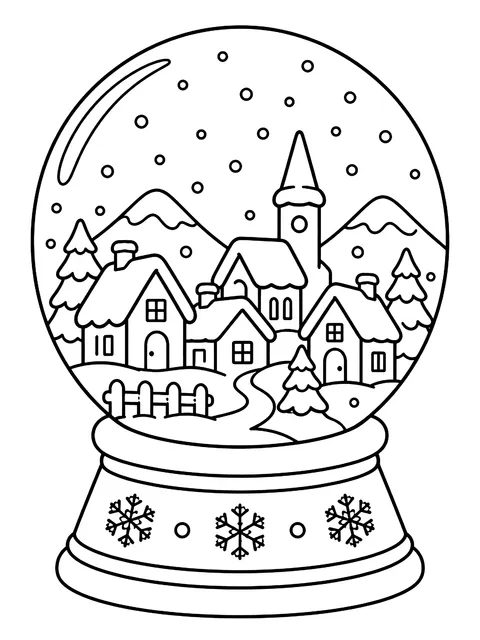 Snow globe with a tiny villageMedium
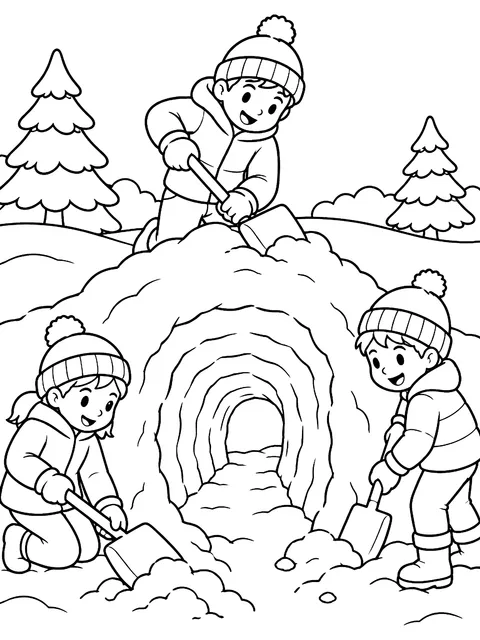 Kids digging a snow tunnelMedium
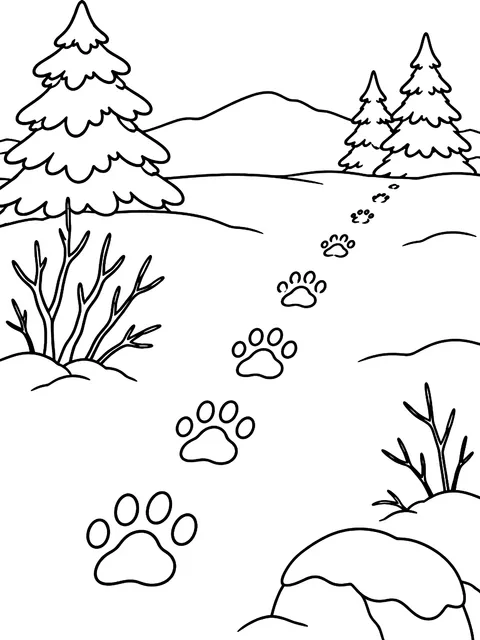 Animal tracks in the snowMedium
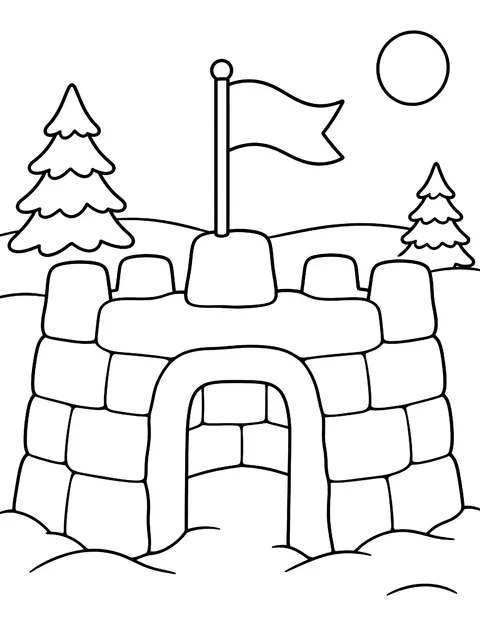 Snow fort with a flagMedium
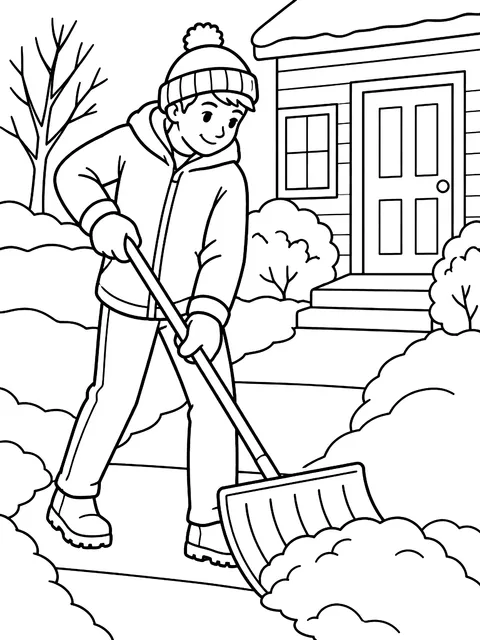 Shoveling the front walkMedium
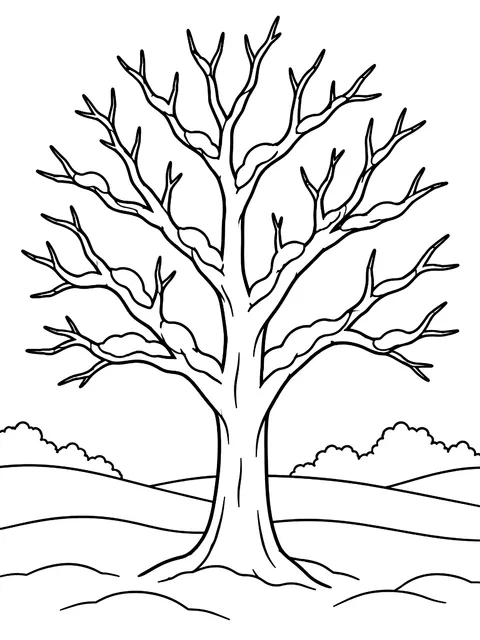 Bare tree outlined in snowMedium
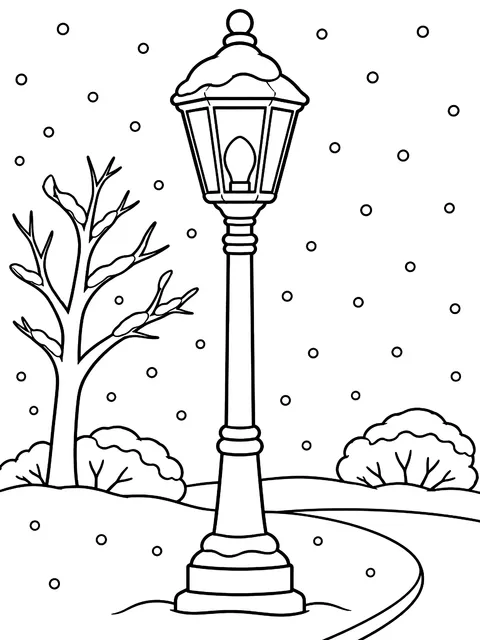 Street lamp in falling snowMedium
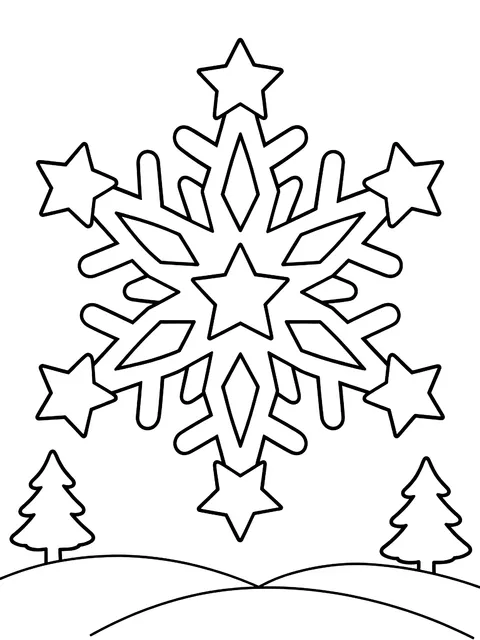 Star-shaped snowflakeMedium
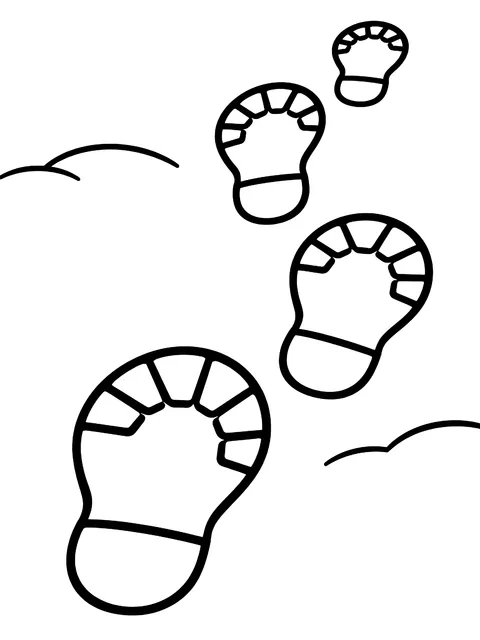 Footprints across a snowy yardEasy
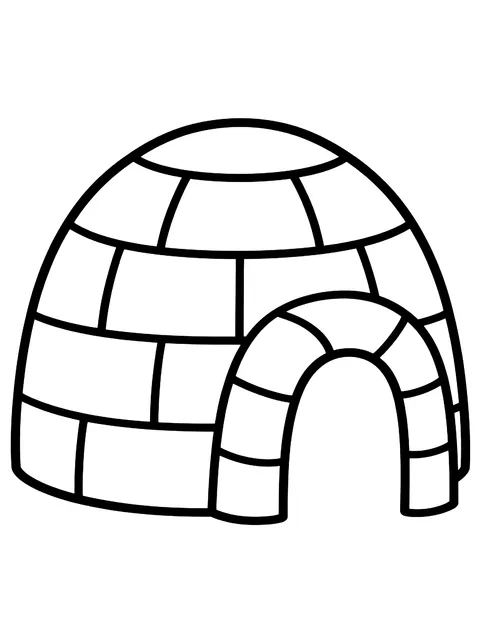 IglooEasy
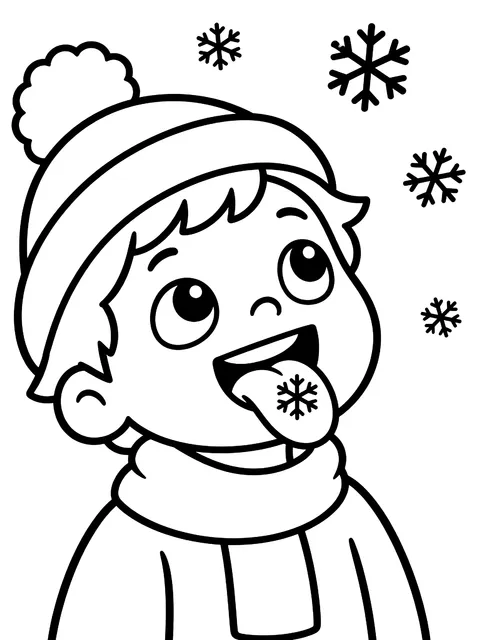 Child catching snowflakes on their tongueEasy
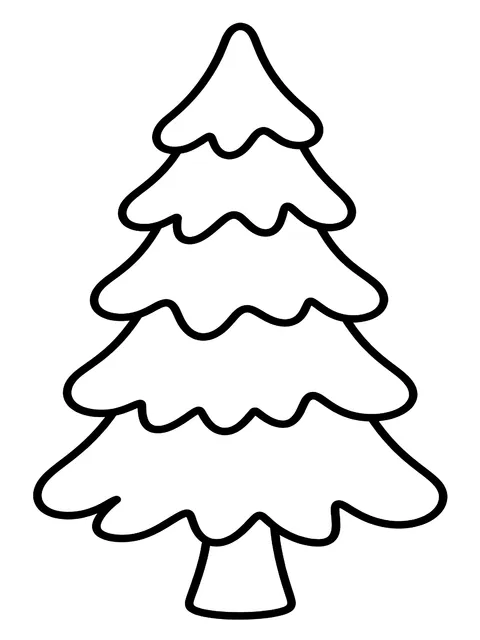 Pine tree covered in snowEasy
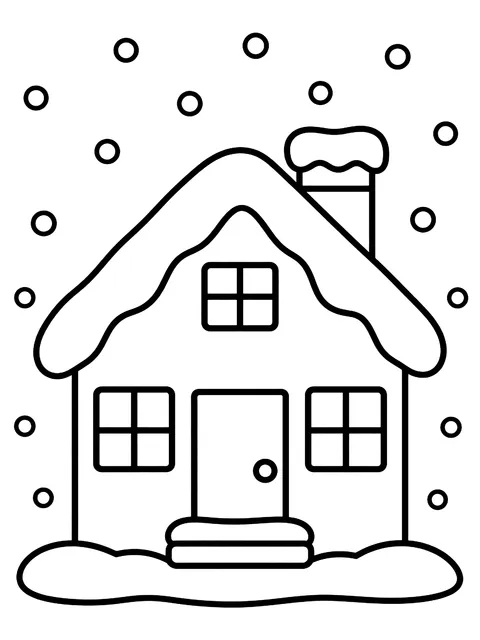 Snow falling on a houseEasy
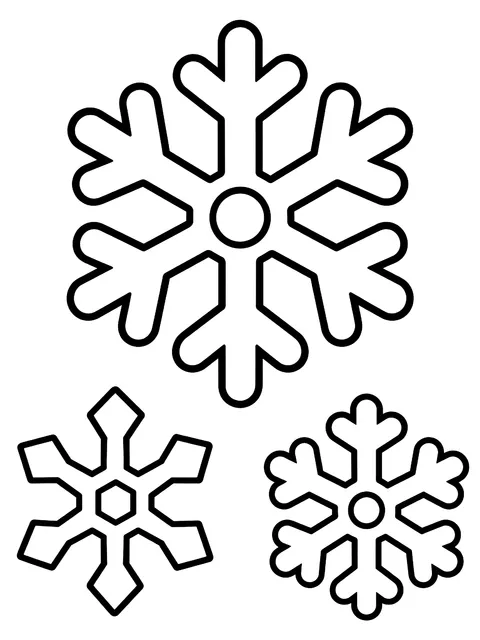 Three different snowflakesEasy
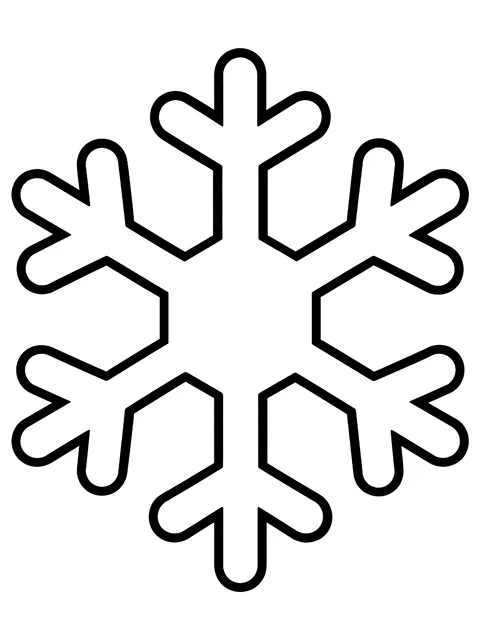 Simple six-arm snowflakeEasy
Snow designs on this page
- Snowflakes: six-armed crystals in simple and intricate versions, great for symmetry practice
- Snowfall scenes: flakes drifting over rooftops, street lamps and park benches
- Snowy trees: pines with loaded branches and bare trees outlined in white
- Snow day fun: catching flakes on a tongue, shoveling the walk and tunneling into a drift
- Snow shelters: igloos and snow forts with flags on top
- Tracks in the snow: footprints, paw prints, bird tracks and sled trails
- Snow globes: little winter worlds inside a glass dome
Snow facts: why every snowflake has six sides
Snow forms high in the clouds when water vapor freezes onto a speck of dust. As the tiny crystal falls, more vapor freezes onto it and it grows arms. Water molecules lock together in a six-sided pattern when they freeze, so snowflakes have six arms or six sides, never five or eight. The exact shape depends on the temperature and dampness of the air the flake falls through, which is why it's so unlikely that two large flakes turn out exactly alike. Snow looks white because its many tiny ice surfaces scatter all the colors of light at once.
Ways to use snow coloring pages
- Symmetry lesson: color one arm of a snowflake, then repeat the same colors on the other five.
- Paper snowflakes: after coloring, fold and cut plain paper to make matching flakes for the window.
- Blue paper trick: print on light blue paper and color the snow with a white crayon or chalk.
- Weather chart: add a snow page to the classroom calendar each time it snows and count them at the end of winter.
- Track detectives: color the animal tracks page and guess who walked by.
Frequently asked questions
Are these snow coloring pages free?
Yes. Every snow coloring page here is free to print and download for personal and classroom use.
How do you color snow when the paper is already white?
Color what's around it. Shade the sky gray or blue, add pale blue or purple shadows under trees and drifts, and leave the snow itself blank. A light touch works better than heavy pressure.
Do all snowflakes really have six sides?
Yes. Ice crystals grow in a six-sided pattern because of the way water molecules join when they freeze. Some flakes look like stars, some like flat plates and some like needles, but the six-fold shape is always there.
Do you have snow pictures to color for places without snow?
Yes. The snowfall scenes, igloo and snow globe pages work anywhere. Pair them with a book about winter or a tray of ice cubes for a hands-on lesson.