Smiley Face and Emoji Coloring Pages
These smiley face and emoji coloring pages are round, simple and full of feeling. Print a classic happy face, a face laughing so hard it cries, a sleepy face, a surprised face, a silly one with its tongue out and a dozen more. They're our own drawings in a plain, friendly style, plus blank circles for inventing a face of your own.
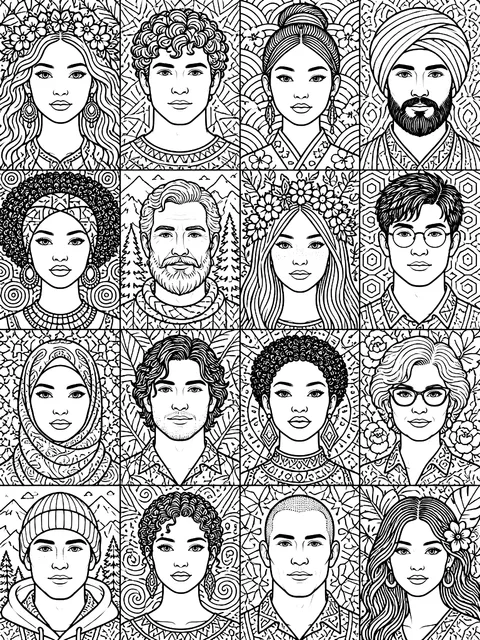 Grid of sixteen different facesDetailed
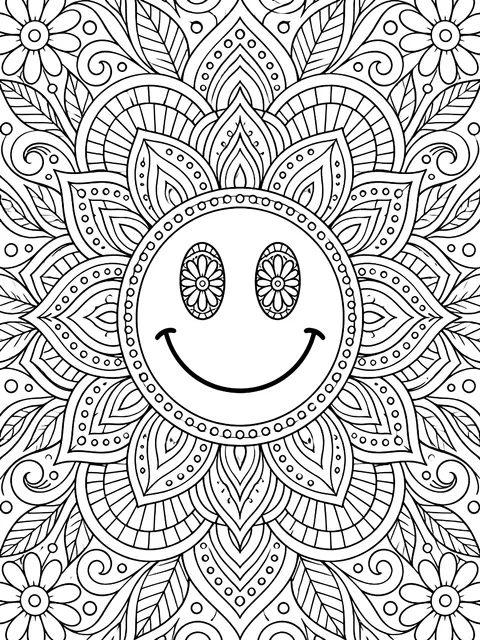 Smiley face mandalaDetailed
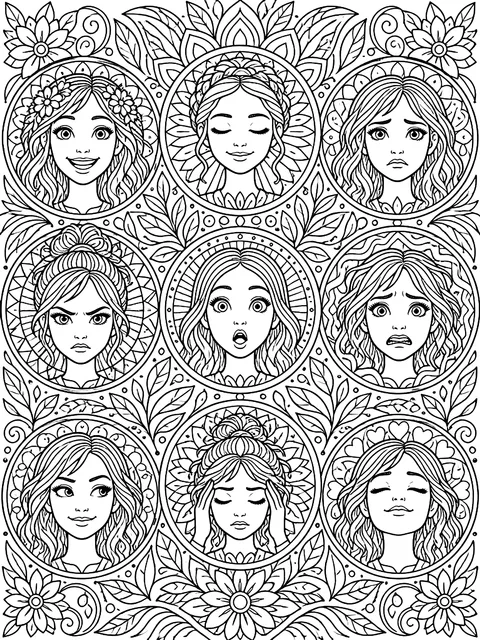 Feelings chart with nine facesDetailed
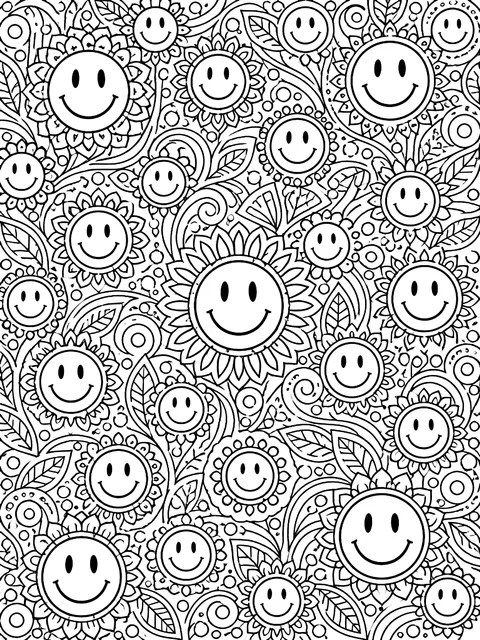 Pattern page of small smiley facesDetailed
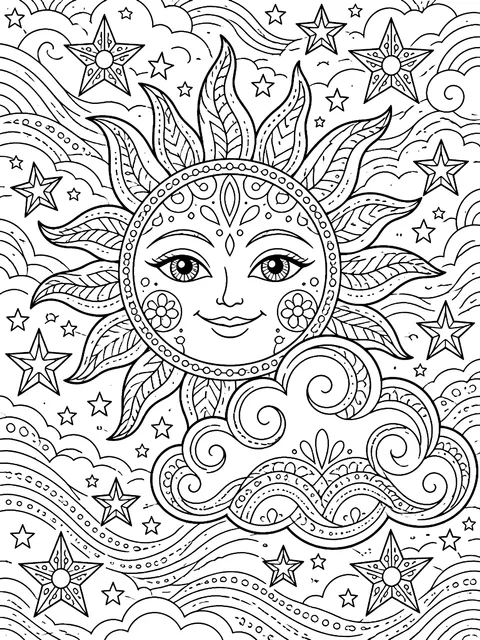 Smiling sun, cloud and starsDetailed
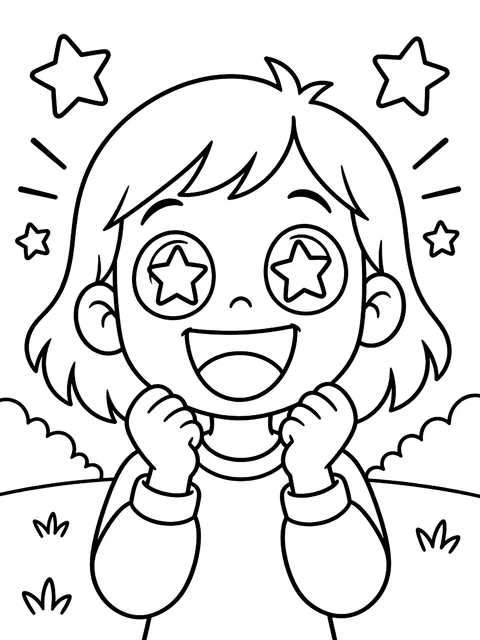 Excited face with star eyesMedium
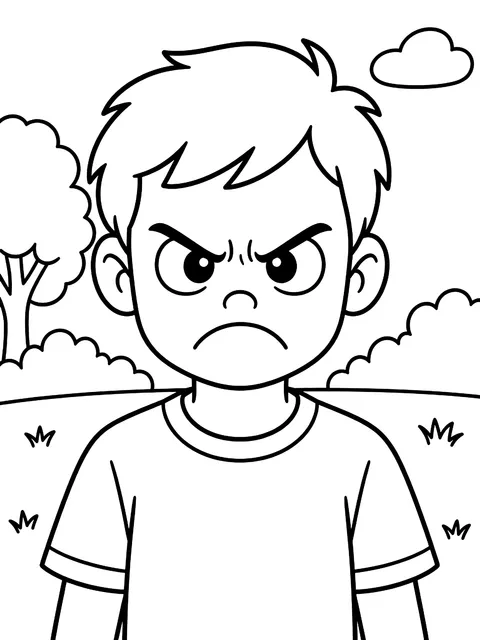 Angry face with a frownMedium
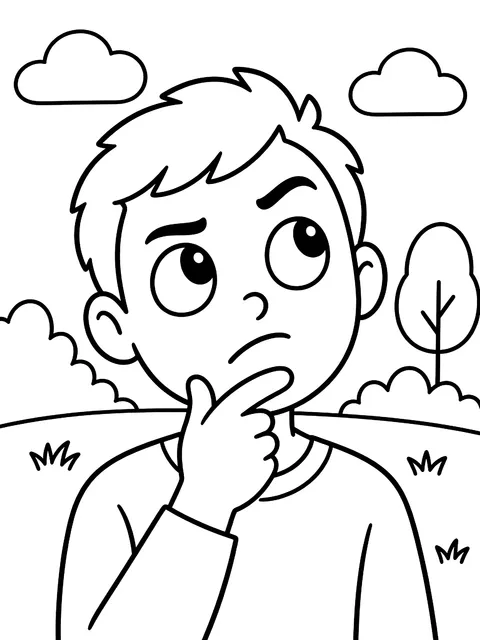 Thinking face with a raised eyebrowMedium
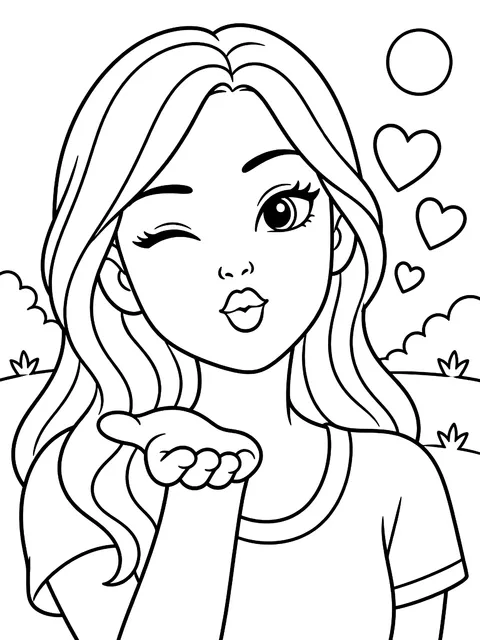 Face blowing a kissMedium
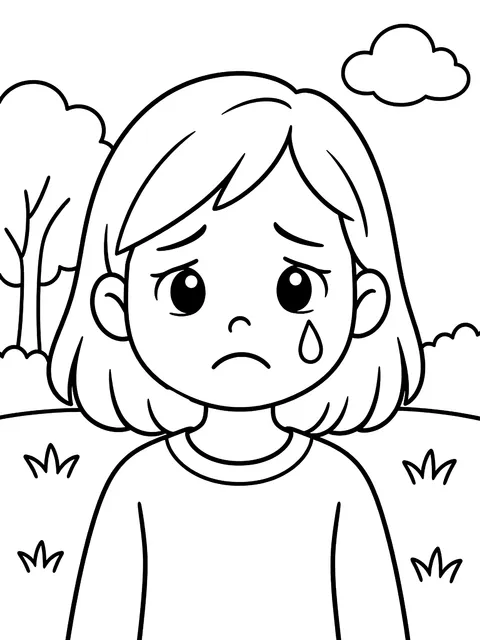 Sad face with one tearMedium
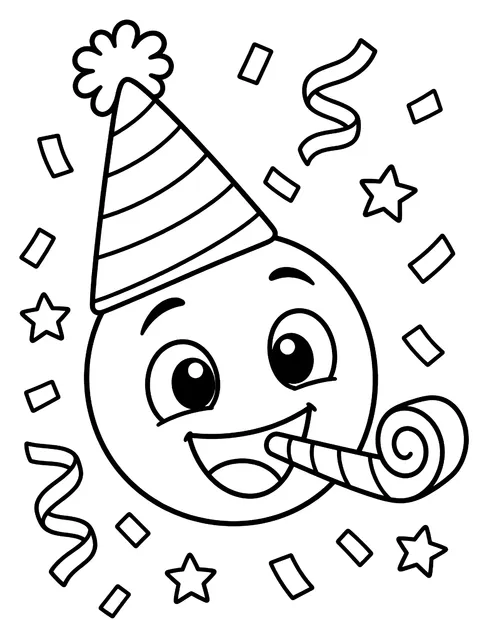 Party face with a hat and confettiMedium
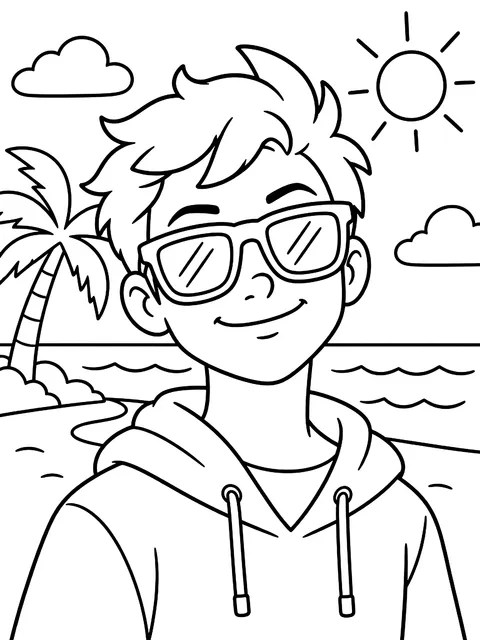 Cool face in sunglassesMedium
 Laughing face with happy tearsMedium
 Four blank circles to draw your own facesEasy
 Face with heart eyesEasy
 Surprised faceEasy
 Silly face with its tongue outEasy
 Sleepy face with ZsEasy
 Winking faceEasy
 Classic smiling faceEasy
Faces in these emoji coloring pages
- Happy faces: a simple smile, a wide grin and a wink.
- Laughing faces: eyes squeezed shut and tears of joy.
- Loving faces: heart eyes, or a face blowing a kiss.
- Silly faces: tongue out, sunglasses on or a party hat.
- Sleepy faces: closed eyes and a row of little Zs.
- Sad and angry faces: for talking about harder feelings.
- Surprised faces: a round mouth and raised eyebrows.
- Blank faces: empty circles for drawing your own.
Where smiley faces come from, and how to use them
People have been drawing faces with two dots and a curve for a very long time. The yellow smiley became famous in the United States in the 1960s and was everywhere on buttons and stickers by the early 1970s. The sideways smiley typed with a colon, a hyphen and a parenthesis dates to 1982, when a computer scientist suggested it as a way to mark jokes in online messages. The word emoji is Japanese: e means picture and moji means character. The first sets appeared on Japanese mobile phones in the late 1990s.
Faces work so well because we read feelings from very little. Change the curve of the mouth or the angle of the eyebrows and the whole mood changes. That makes these pages handy for more than coloring:
- Feelings check-in. Ask a child to pick and color the face that matches their day.
- Feelings words. Write a word under each face: proud, nervous, frustrated, excited.
- Draw the missing face. On the blank circles, call out a feeling and have everyone draw it.
Yellow is the traditional color, but it isn't a rule. Try matching color to feeling: a calm blue, a fiery red, a sunny orange.
Frequently asked questions
Are these smiley face coloring pages free?
Yes. All smiley face coloring pages are free to download and print for personal and classroom use.
Are these the same emoji that are on my phone?
No. The emoji on phones and in apps are designed and owned by the companies that make them. Ours are original smiley faces drawn in a simple style, so they look familiar without copying anyone's set.
Do you have a smiley face coloring page for teaching emotions?
Yes. The feelings chart shows nine faces with a blank line under each, and the larger single faces cover happy, sad, angry, surprised and sleepy. Counselors and teachers use them for lessons about feelings.
Which smiley face pictures to color are best for toddlers?
The classic smile and the winking face. Each is one large circle with two or three shapes inside, so a toddler can cover it with a single crayon.