Crayon Coloring Pages
Crayon coloring pages are a little joke that never gets old: you color a crayon with a crayon. They're also among the most useful sheets a teacher can print. This set has single crayons with blank labels, a full box, crayons with smiling faces, crayons labeled with color words and a few scenes where the crayons do the drawing.
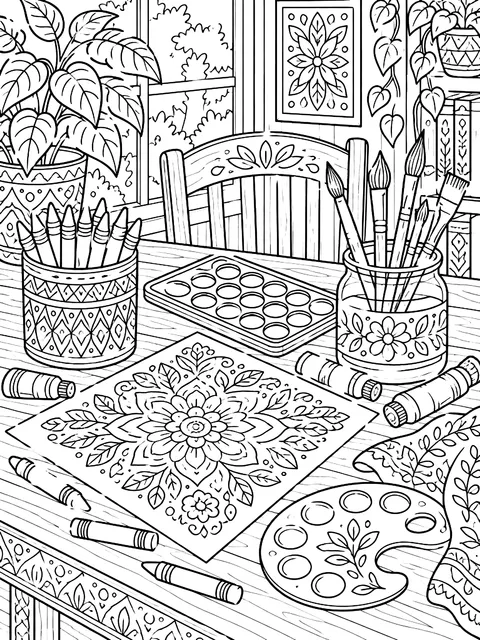 Art table with crayons, paint and brushesDetailed
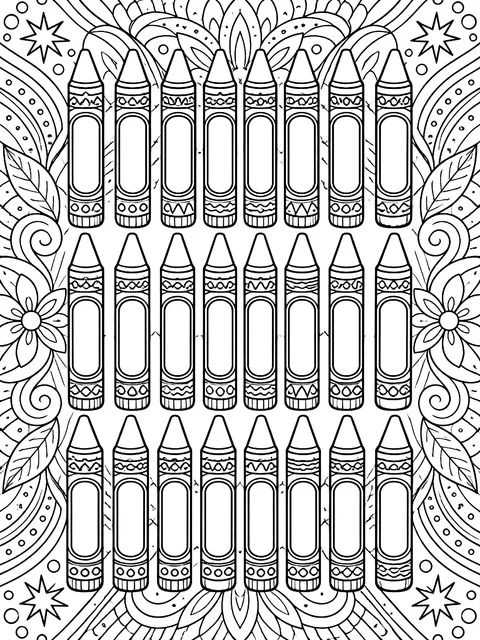 Poster of twenty-four crayons with blank labelsDetailed
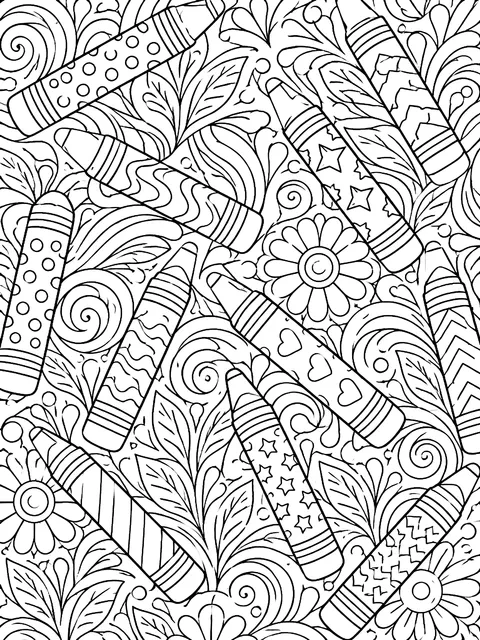 Crayon pattern pageDetailed
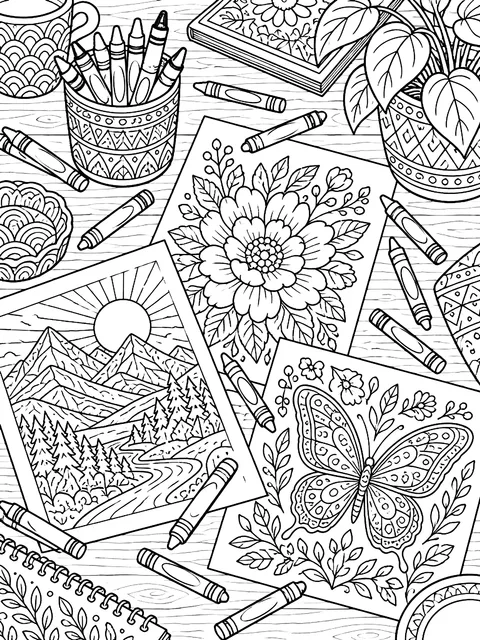 Crayons scattered across a desk with drawingsDetailed
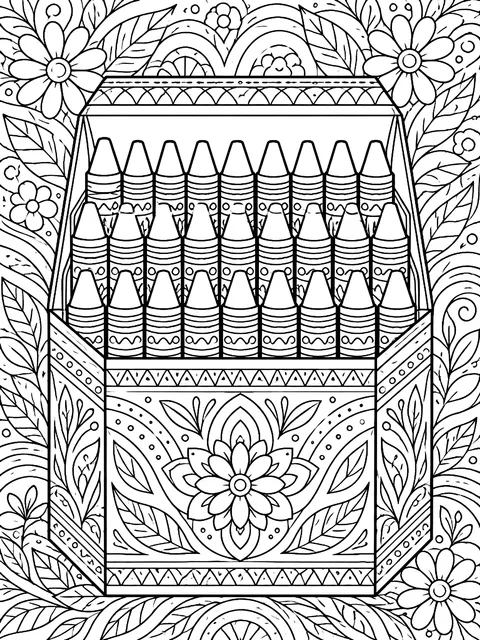 Big box with rows of crayonsDetailed
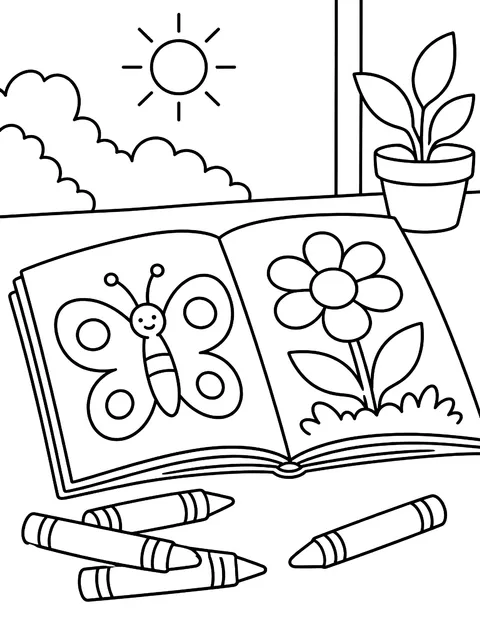 Crayons next to an open coloring bookMedium
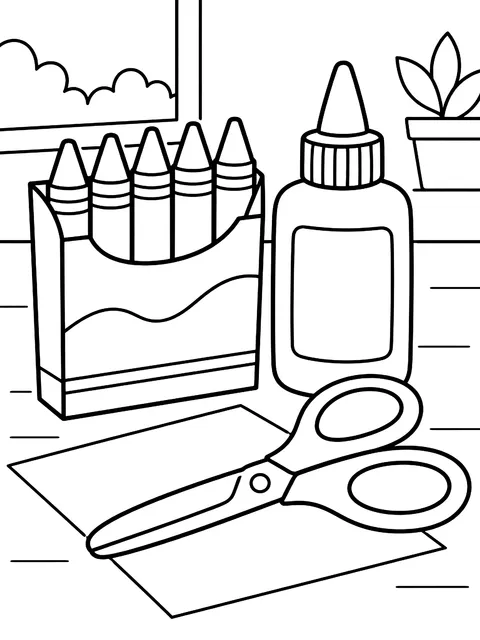 Crayons with scissors and glueMedium
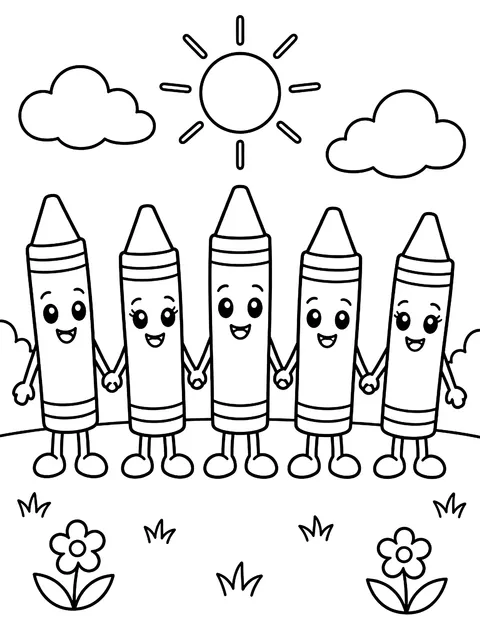 Row of crayon friends holding handsMedium
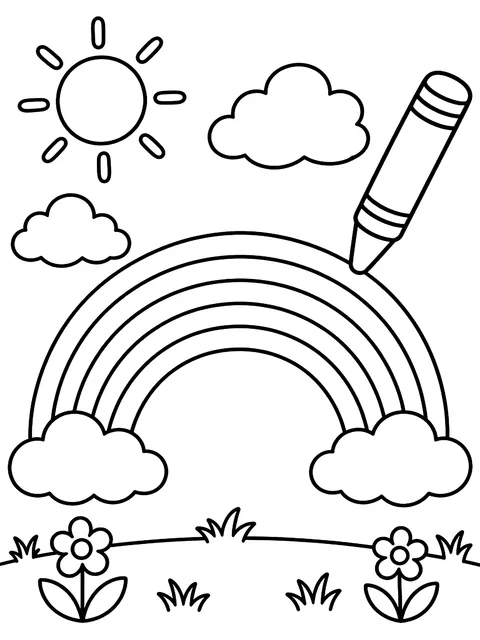 Crayon drawing a rainbowMedium
 Crayon drawing a house and a sunMedium
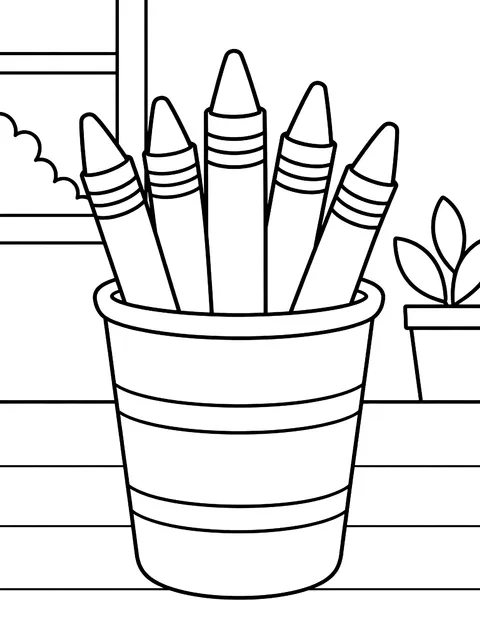 Crayons standing in a cupMedium
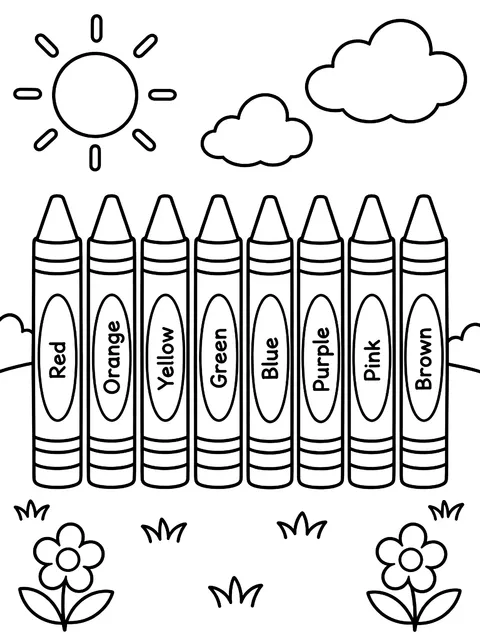 Eight crayons labeled with color wordsMedium
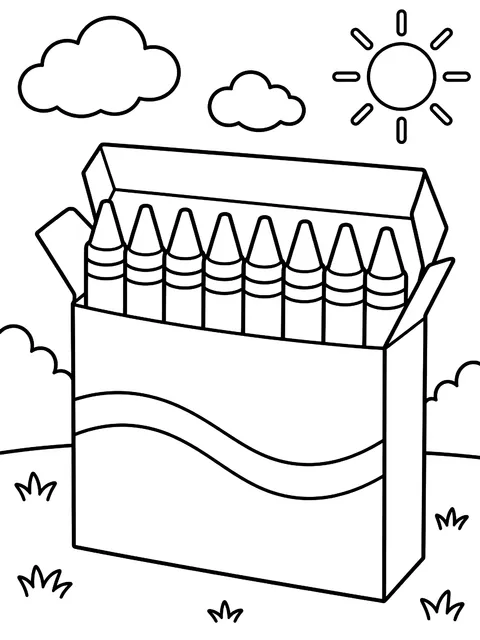 Open box of eight crayonsMedium
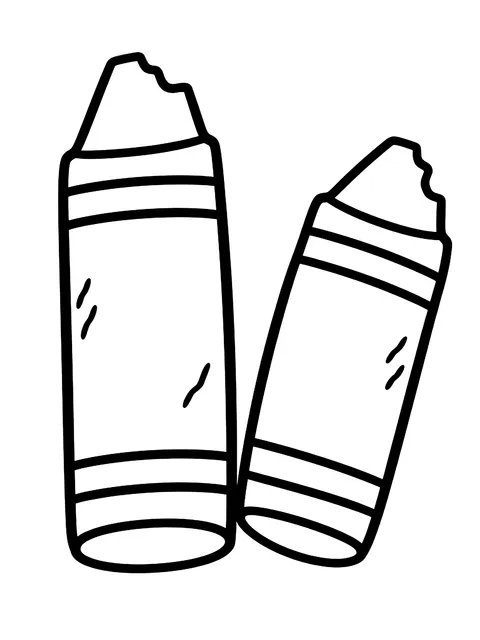 Two short worn crayonsEasy
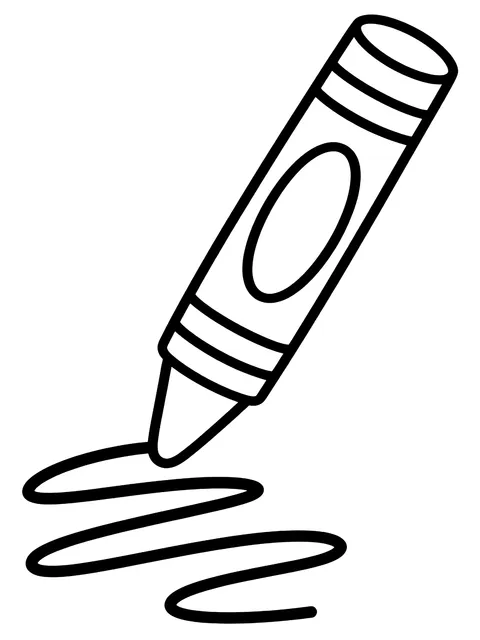 Crayon drawing a scribbleEasy
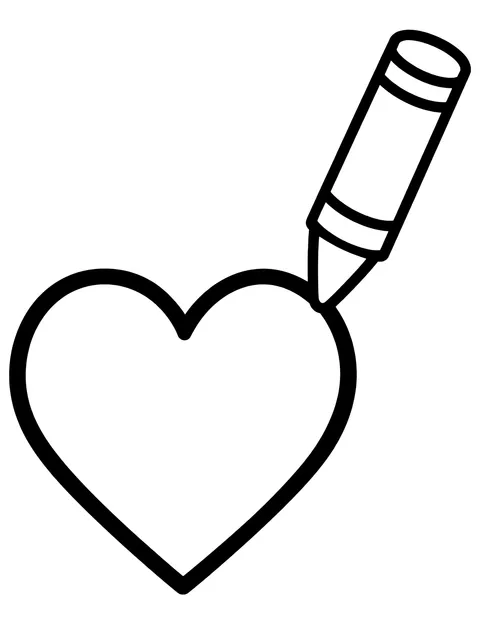 Crayon drawing a heartEasy
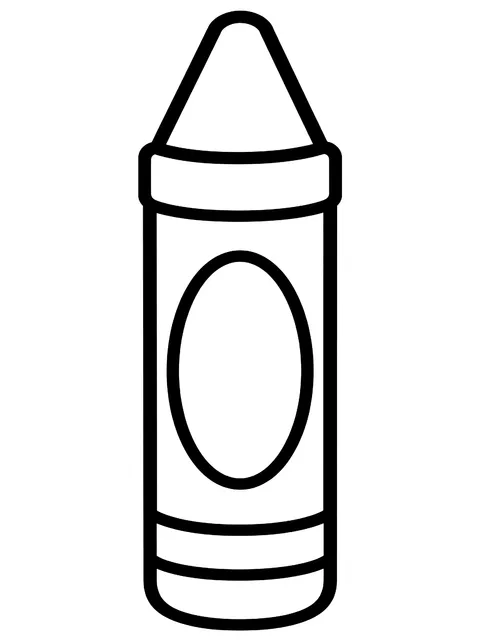 Crayon name tagEasy
 Three crayons side by sideEasy
 Smiling crayon with arms and legsEasy
 One big crayon with a blank labelEasy
Crayon coloring pages for home and class
- Single crayons: one big crayon with a blank label for a color name or a child's name.
- Crayon boxes: a row of eight sticking out of an open box.
- Color-word crayons: each crayon is labeled red, blue, green and so on, to be colored to match.
- Crayons with faces: smiling crayons with arms and legs.
- Name tags: a crayon-shaped tag for a desk or a cubby.
- Drawing scenes: a crayon in the middle of drawing a rainbow, a house or a scribble.
- Art supplies: crayons alongside scissors, glue, paint and brushes.
How crayons are made, and how to color with them
A crayon is mostly paraffin wax mixed with colored powder called pigment. In a factory, the wax is melted, the pigment is stirred in and the hot liquid is poured into molds with hundreds of crayon-shaped holes. It cools and hardens in a few minutes, and then each stick gets a paper wrapper. The wrapper keeps your fingers clean and makes the crayon less likely to snap.
Getting more out of a crayon:
- Pressure is your second color. Press lightly for a pale shade and firmly for a deep one. One crayon can give you three or four tones.
- Layer. Color yellow, then go lightly over it with red, and you get orange. Light colors first, dark on top.
- Use the side. Peel the paper off an old crayon and rub it flat for wide, soft areas such as sky and grass.
- Try a rubbing. Put a leaf or a coin under the paper and rub with the side of a crayon.
- Wax resists water. Draw in white crayon, then paint over it with watercolor, and the drawing appears.
When you color the crayons on these pages, fill the pointed tip and the bottom end with the full color, and shade the wrapper in a paler version of it.
Frequently asked questions
Are these crayon coloring pages free?
Yes. All crayon coloring pages are free to download and print for personal and classroom use.
How do teachers use crayon coloring pages?
For color words, mostly. Students read the word on each crayon and color it to match. The blank-label crayons become name tags for desks and cubbies, and the poster of twenty-four crayons makes a first-week display where each crayon carries a student's name.
Is there a crayon coloring page for learning colors at home?
Yes. Start with the box of eight: red, orange, yellow, green, blue, purple, brown and black. Say each color out loud, find the matching crayon and fill it in. For toddlers, the single big crayon is enough for one sitting.
What can I do with broken crayons?
Keep using them. Short pieces are good for small hands and for rubbing on their side. You can also peel them, sort the bits by color into a silicone muffin mold and melt them in a low oven to make chunky new crayons. That part is a job for an adult.