
Back to Blog List

35 Fun Facts About Dogs for Kids and Dog Lovers

October 25, 2026
Dogs have unique nose prints, sweat through their paws and smell far better than people. 35 fun facts about dogs for kids, plus coloring ideas.
35 Fun Facts About Dogs for Kids and Dog Lovers
fun facts about dogs
dog facts for kids
dogs
puppies
pets

Dogs have lived alongside people for thousands of years, and they're still full of surprises. Their noses, ears, paws and even their tails all have jobs you might not expect. Here are 35 fun facts about dogs for kids, classrooms and dog lovers of all ages.

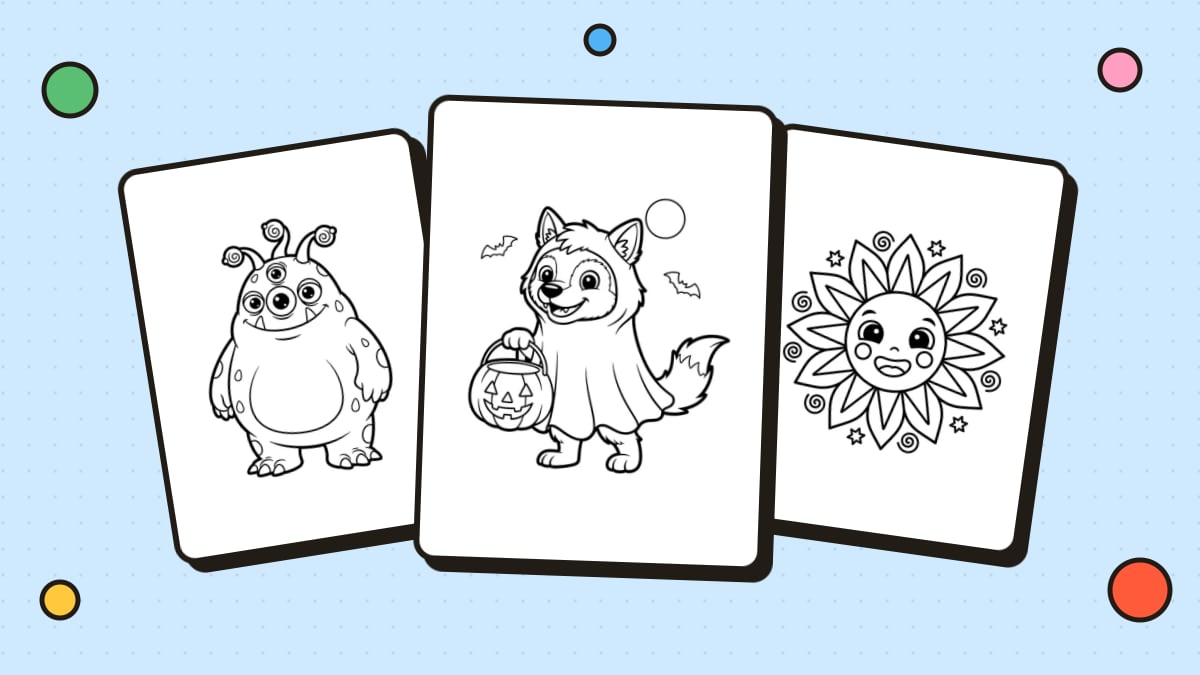
When you're done reading, print a page from our animal coloring pages, or make a coloring page of your own dog with the photo to coloring page tool.

Super noses

  1. A dog's sense of smell is many thousands of times better than ours. Scientists estimate it at somewhere between 10,000 and 100,000 times more sensitive.
  2. Dogs have hundreds of millions of scent receptors in their noses. People have only a few million.
  3. Every dog's nose print is unique, like a human fingerprint.
  4. Wet noses help dogs smell. The moisture traps scent particles.
  5. Dogs can smell in "stereo". Each nostril picks up smells separately, which helps them tell where a smell is coming from.
  6. Some dogs have jobs using their noses, such as finding lost people, checking luggage at airports or alerting people with certain medical conditions.

Ears, eyes and senses

  1. Dogs hear much higher sounds than people, which is why a dog whistle works even though you can't hear it.
  2. Dogs can move their ears to point them toward a sound.
  3. Dogs aren't color-blind in the way people once thought. They see blues and yellows, but reds and greens look more like grays and browns to them.
  4. Dogs see better than people in dim light.
  5. Puppies are born with their eyes and ears closed. They open after about two weeks.

Bodies and paws

  1. Dogs sweat through their paw pads. Mostly, they cool down by panting.
  2. Adult dogs usually have 42 teeth. Puppies have 28 baby teeth.
  3. A dog's normal body temperature is warmer than ours, around 38–39 °C (101–102.5 °F).
  4. Greyhounds are among the fastest dogs, able to run around 40 miles per hour (65 km/h) in short sprints.
  5. The Chihuahua is often called the smallest dog breed.
  6. Some of the largest breeds include the Great Dane and the Irish Wolfhound.
  7. Dogs have three eyelids. The third, hidden in the corner, helps protect and clean the eye.
  8. Dalmatian puppies are born white. Their spots appear as they grow.

How dogs talk

  1. Dogs talk with their whole body: ears, tail, posture and eyes.
  2. A wagging tail doesn't always mean happy. The speed, height and direction of the wag all mean different things.
  3. The Basenji is known as the "barkless dog". It makes a yodel-like sound instead.
  4. Dogs can learn many words. Some well-trained dogs know the names of dozens or even hundreds of toys.
  5. Dogs yawn when they're stressed, not only when they're tired.
  6. Play bows (front down, rear up) mean "let's play!"

Dogs and people

  1. Dogs were the first animals people domesticated. They descend from ancient wolves, and dogs and people have lived together for well over 15,000 years.
  2. There are hundreds of dog breeds around the world, from tiny lap dogs to giant guardians.
  3. Dogs can read human faces and often notice when we're happy or sad.
  4. A dog named Laika was the first animal to orbit Earth, aboard Sputnik 2 in 1957.
  5. Service dogs help people with disabilities in everyday life.

Sleep and daily life

  1. Dogs sleep a lot: often 12 to 14 hours a day, and puppies even more.
  2. Dogs dream. Twitching paws during sleep may mean they're dreaming.
  3. Dogs curl up to sleep to stay warm and protect their bellies.
  4. Chocolate, grapes and onions are dangerous for dogs. Never share these with a pet.
  5. Dogs need exercise and play every day to stay healthy and happy.

Dog coloring ideas