Color by number is a kind of coloring page where every area carries a number, and a key tells you which color each number stands for. You read the key, fill in the areas, and the picture appears. It is part puzzle, part coloring page, and it is popular with kids, adults and teachers for different reasons. This guide explains how it works, how to pick a first page and the right supplies, and how to make a numbered page of your own from a picture you like.
What Is Color by Number? How It Works and Where to Start
October 13, 2026
What is color by number? Learn how numbered coloring pages work, how they differ from paint by number, who they suit, and how to start with free printables.
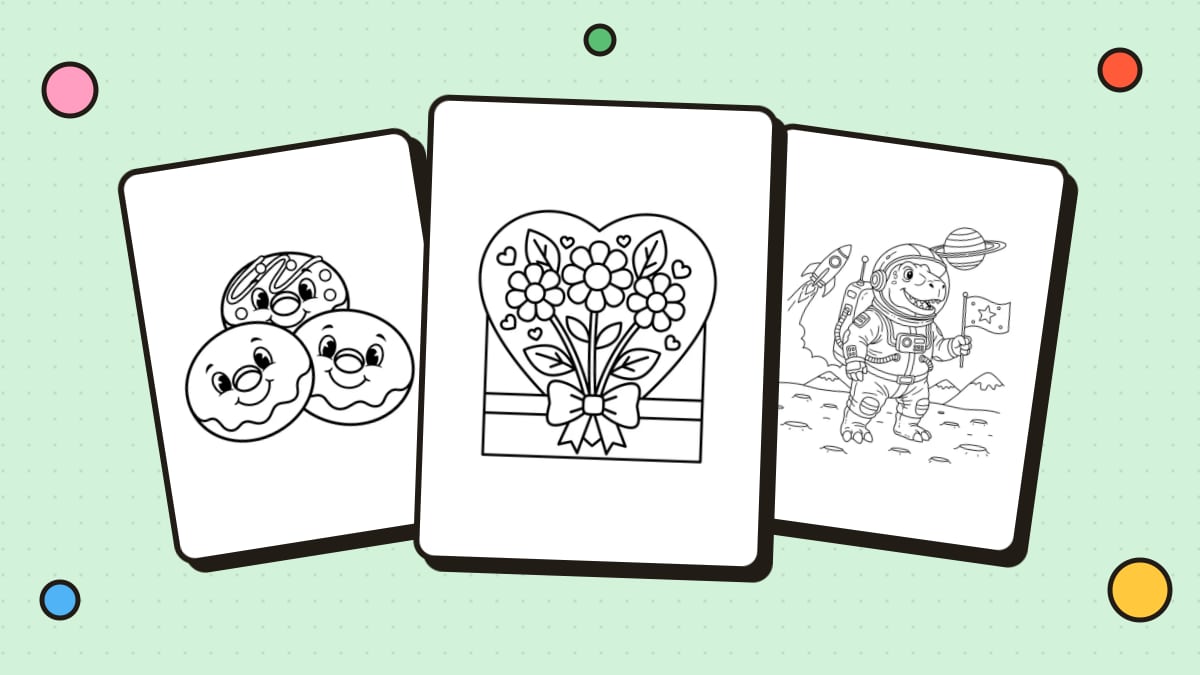
color by number
what is color by number
paint by number
coloring
activities
How color by number works
A page has two parts. The first is the picture, divided into areas, each with a small number. The second is the key: a list that matches each number to a color, usually with a name and a small swatch. For example, 1 is light blue, 2 is green and 3 is yellow. You choose a number, find every area with that number, and color them all before moving on.
When every area is filled, the full picture shows up. Some pages keep it a surprise. Others show the finished picture on a second page so you can check your work.
How to do a color by number page, step by step
- Read the key first. Check how many colors there are, and whether any are close, such as two greens.
- Gather the colors before you start. Lay out the pencils, crayons or markers you need. If you don't have an exact match, pick the nearest one and use it consistently for that number.
- Work one number at a time. Finish every area marked 1, then 2, and so on. It prevents missed spots.
- Start with the light colors. Yellow and pale blue are easy to smudge or cover, so do them before the darks.
- Color lightly over the numbers. Dark ink can hide a number you haven't finished. With pencils, press softly until you are sure.
- Check for missed areas. Hold the page up to the light or compare it to the reference picture.
- Add details if you like. A background, a border or shading is up to you.
Color by number vs paint by number
The ideas are close, and the names get mixed up. The difference is mostly about format.
| Color by number | Paint by number | |
|---|---|---|
| Usual format | Printed page | Canvas or heavy board |
| Tools | Pencils, crayons, markers | Paint and brushes |
| Time | Minutes to a few hours | Hours to weeks |
| Cost | Very low | Higher, especially for kits |
| Best for | Quick sessions, kids, classrooms | Long projects that become a keepsake |
Both use the same principle of numbered areas and a key. Many people try color by number first and move to paint when they want a bigger project.
Kinds of color by number
- Classic pictures. Animals, flowers, scenes and objects, from three colors to more than twenty.
- Seasonal pages. Holiday and season scenes, which are always popular around the same months, such as Christmas and Halloween.
- Math color by number. Each area holds a problem, and the key lists answers. Multiplication and addition and subtraction pages are common in classrooms.
- Reading versions. Instead of numbers, each area holds a sight word, a letter or a symbol.
- Mystery pages. A grid of numbered squares, with no outline, that reveals a hidden picture.
- Digital versions. Apps and websites let you tap to fill areas on a screen. The idea is the same.
Who color by number suits
Young kids practice recognizing numerals and matching them to colors, and the format gives them a clear finish.
Teachers and parents use it as quiet practice for numbers, math facts or reading, with the picture as motivation. Pages where the key holds answers also give an easy way to check work: a wrong answer produces a visibly odd picture.
Adults like that the color choices are made. You can focus on technique and relax without worrying about a clashing palette. Detailed pages for adults use 12 to 24 colors.
Anyone who feels nervous about coloring freehand will find that a key lowers the pressure.
What it offers
A numbered page asks for a little attention, and it rewards you with visible progress. People mention a few things: it is calming, it keeps hands busy, it makes a good screen-free activity, and it gives a sense of finishing something. In kids, it supports number recognition and fine motor control. These are modest benefits, not treatments. For more about what coloring itself offers, read the benefits of coloring, and see color by number activities for ideas on using it with groups.
How to choose your first page
Count the colors. That number tells you more about difficulty than the picture does.
| Colors | Level | Good for |
|---|---|---|
| 3 to 6 | Easy | Young kids, quick breaks, first-timers |
| 7 to 10 | Medium | School-age kids, casual adult colorists |
| 11 to 15 | Detailed | Confident kids and most adults |
| 16 or more | Advanced | Adults who like long, careful sessions |
Also look at the size of the areas. Large areas are forgiving; tiny ones need sharp pencils and steady hands. Pick a subject you like, because you will look at it for a while. And print on plain paper at full size, so the numbers stay readable.
What to color with
| Tool | Strengths | Watch out for |
|---|---|---|
| Colored pencils | Reach small areas, easy to layer and correct | Slower on big areas |
| Crayons | Cheap, safe for small kids | Thick tips cover small numbers and tight spaces |
| Washable markers | Fast, bright | Can bleed through thin paper and hide numbers |
| Fine-tip markers | Crisp color in small areas | Test on scrap first, mistakes can't be erased |
| Gel pens | Good for accents and tiny areas | Slow to dry, can smear |
Colored pencils are the best all-round tool, since they reach small areas and let you press lightly. If you plan to use markers, heavier paper helps. For paper, 28 to 32 lb stock holds layers and resists bleeding. Read how to print coloring pages for printing settings, and how to color with colored pencils if you are new to them.
Make your own
You can also create a numbered page yourself, and it is a good way to turn a favorite picture into an activity. The simplest method works with any outline drawing:
- Start with clean line art. You need black outlines with plenty of white space. The Photo to Coloring Page tool turns a photo of a pet, a child or a favorite place into line art, and the AI Coloring Page Generator creates line art from a short description such as "a fox in a snowy forest". Both give you a printable page. They produce outlines, not numbers, so the numbering is the part you do.
- Print the page. Use plain paper at full size.
- Decide on a palette. Choose five to eight colors for a first attempt.
- Number the areas. Write a small number in each area with a pencil. Use the same number for every area that will share a color.
- Write the key. Make a list at the bottom or side, with a color swatch beside each number.
- Test it. Color one small section to check that the numbers are readable and the colors work together.
Keep neighboring areas in different colors so the picture stays clear, and avoid using more than ten colors for kids. For a longer walkthrough, including math versions, see our guide to DIY color by numbers. If you just want something to color right now, the free coloring pages are ready to print.
Common mistakes
- Starting with too many colors. A 24-color page can feel like a chore. Begin with fewer than ten.
- Coloring over a number before the area is finished. It is easy to lose track of which areas remain.
- Using markers on thin paper. Bleed-through ruins the back and can hide numbers on the next page.
- Printing too small. If the numbers are hard to read, enlarge the page.
- Skipping the key check. Two similar colors, such as dark green and teal, are easy to confuse.
FAQ
What does color by number mean?
It means coloring a picture by matching the number in each area to a color in a key. The picture is revealed as you fill in the areas.
Is color by number the same as paint by number?
They share the same idea. Color by number is usually a printed page filled with pencils or crayons, and paint by number is usually a larger pattern filled with paint.
Is color by number good for kids?
Yes. It practices number recognition, matching and fine motor skills, and it gives children a satisfying result. Start with pages that use three to six colors.
How many colors should a beginner start with?
Three to six for young children, and up to ten for older kids and adults. You can move to longer keys once the process feels comfortable.
What is the best way to color a numbered page?
Work one number at a time, start with the lightest colors and press lightly until you are sure of each area. Colored pencils give the most control on small spaces.
Can I make my own color by number page?
Yes. Start with clean line art, number each area, and write a key. The Photo to Coloring Page and AI Coloring Page Generator tools can provide the outline, and you add the numbers and the key by hand.
Related Posts
Nov 15, 2026
Spray Paint Stencil Ideas: 12 Projects and Their Settings
12 spray paint stencil ideas for canvas, wood, fabric and more, with the layer, size and threshold settings to try for each, plus basic safety.
Oct 31, 2026
What Colors Make Red? Mixing Red, Maroon, Burgundy and Pink
What colors make red? Red is a primary color, but magenta and yellow can make it. How to mix dark red, maroon, burgundy, crimson and pink.
Nov 28, 2026
Gingerbread Man Activities for Preschool and Kindergarten
Gingerbread man activities for a December unit: story retelling, button math, fine motor, crafts and baking, with free printable gingerbread pages.